Not all EV chargers work for home use. Compare Level 2 and Level 3 charging to find the right solution for your Chicago residence.
Share:
Summary:
Level 2 and Level 3 chargers represent two completely different approaches to powering your electric vehicle. Understanding these differences is crucial before you invest thousands in installation.
Level 2 chargers use 240-volt AC power-the same voltage that runs your dryer or electric water heater. They’re designed for steady, reliable charging that works perfectly with your home’s electrical system. Most Level 2 units deliver between 7-19 kW of power, charging your EV from empty to full in 4-10 hours depending on your vehicle’s battery size.
Level 3 chargers, also called DC fast chargers, operate on an entirely different principle. They convert AC power to DC at the charging station itself, bypassing your vehicle’s onboard converter to deliver 50-350+ kW directly to the battery. This allows them to charge most EVs to 80% capacity in 20-40 minutes.
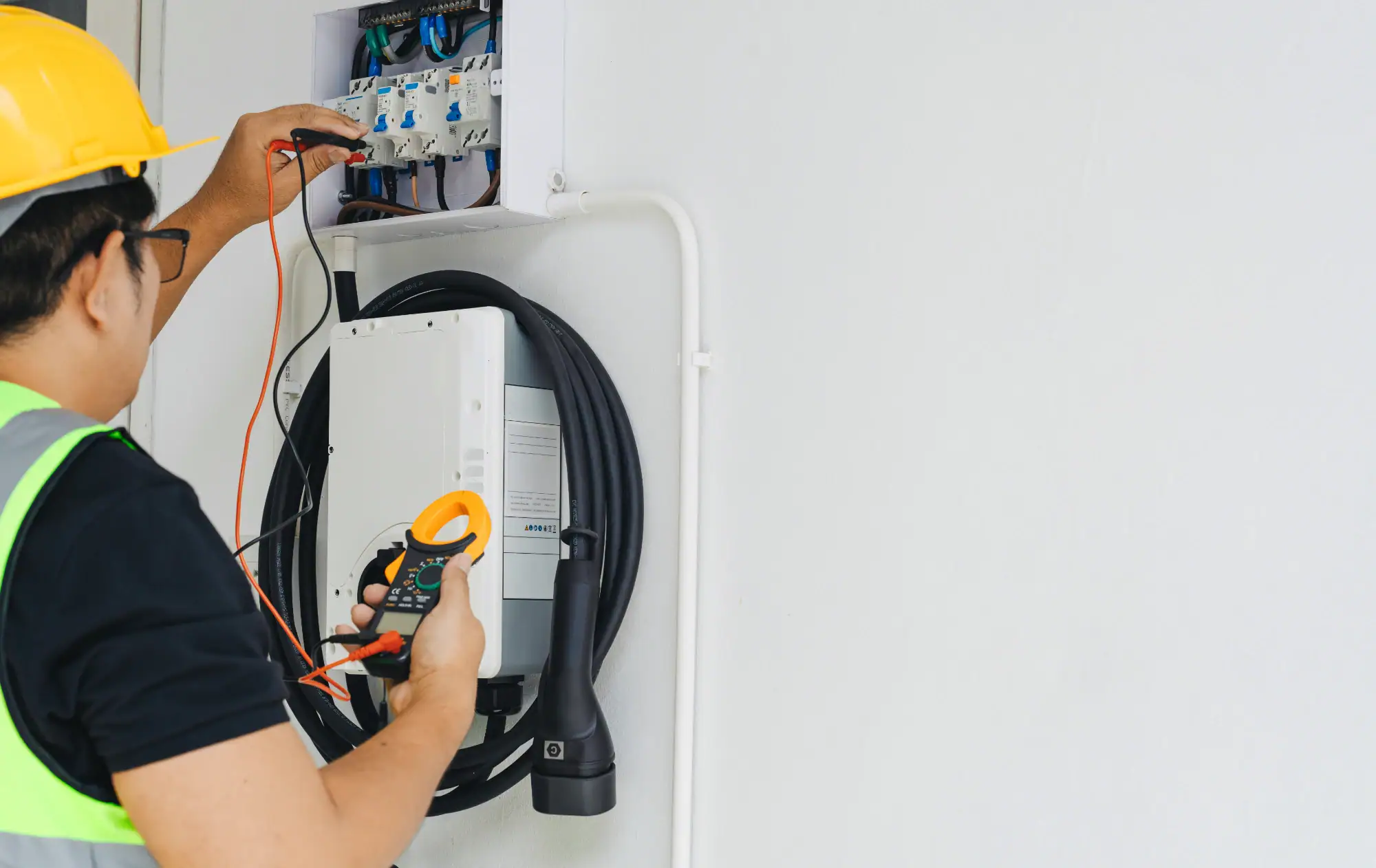
Level 2 charging delivers the reliability most Chicago homeowners actually need without overwhelming your electrical system. These chargers typically provide 25-40 miles of range per hour of charging, which means plugging in overnight gives you a full battery by morning.
The power requirements are manageable for most homes. Level 2 chargers need a dedicated 240-volt circuit with 40-50 amp capacity-similar to what an electric dryer requires. Most homes built after 1990 with 200-amp electrical panels can handle this load without major upgrades. If your home has an older 100-amp or 60-amp panel, you might need an electrical service upgrade, but this is still far less complex than what Level 3 requires.
Installation typically involves running new wiring from your electrical panel to the charging location, installing a dedicated circuit breaker, and mounting the charging unit. The process usually takes 2-4 hours for straightforward installations, and we can handle the permit process and city inspection coordination.
Chicago’s harsh winters do affect charging speed somewhat-cold temperatures can reduce efficiency by 10-20%. But Level 2 charging compensates by giving you longer dwell time. When you’re plugged in for 8-10 hours overnight, weather variations don’t significantly impact your daily driving range.
The smart features available on many Level 2 chargers add real value. You can schedule charging during off-peak hours when ComEd rates are lowest, monitor energy usage through smartphone apps, and even load-balance if you install multiple chargers. These features aren’t just convenient-they can save you hundreds of dollars annually on electricity costs.
Level 3 charging speed is genuinely impressive-and that’s exactly why it’s problematic for home installation. These systems can add 3-20 miles of range per minute, charging most EVs to 80% in 20-40 minutes. That performance comes from delivering 50-350+ kW of power, which creates massive electrical infrastructure demands.
The power requirements make residential installation impractical for most Chicago homeowners. Level 3 chargers typically need 480-volt three-phase power, which isn’t available in residential areas. Getting this power to your home would require ComEd to install a transformer and upgrade the electrical service to your entire neighborhood-a process that costs tens of thousands of dollars and requires utility company approval.
Even if you could somehow get the electrical service, the installation costs are staggering. A basic Level 3 charger costs $25,000-$120,000 for the equipment alone, plus installation fees that often exceed $30,000. Most residential installations would total $50,000-$150,000, and that’s before addressing the ongoing maintenance costs of $2,000-$3,000 annually.
The electrical load also creates practical problems. A Level 3 charger drawing 150 kW would use more power than most entire homes consume. Your electrical panel, wiring, and even the utility connection to your house would need complete replacement. Many Chicago neighborhoods simply don’t have the grid capacity to support residential Level 3 charging without significant utility infrastructure upgrades.
There’s also the question of whether you actually need that charging speed at home. Level 3 makes sense for highway travel stops where turnover matters, but at home, your car sits parked for 8-12 hours anyway. Paying $100,000+ for 30-minute charging when overnight charging works perfectly doesn’t make financial sense for most homeowners.
Want live answers?
Connect with a Jimco Electric expert for fast, friendly support.
Installation costs vary dramatically between Level 2 and Level 3 charging, and understanding these differences is crucial for Chicago homeowners planning their EV charging setup.
Level 2 installation costs range from $800-$2,500 for most Chicago homes, including equipment and professional installation. If you already have a 240-volt outlet in your garage, installation might cost as little as $500-$800. Most homes need a new dedicated circuit, which typically runs $1,200-$1,800 including labor and materials.
Level 3 installation costs start around $50,000 and often exceed $100,000 for residential properties. The equipment alone costs $25,000-$120,000, and installation requires specialized electrical infrastructure that most homes simply don’t have. You’ll need utility company coordination, transformer installation, and potentially neighborhood electrical upgrades.
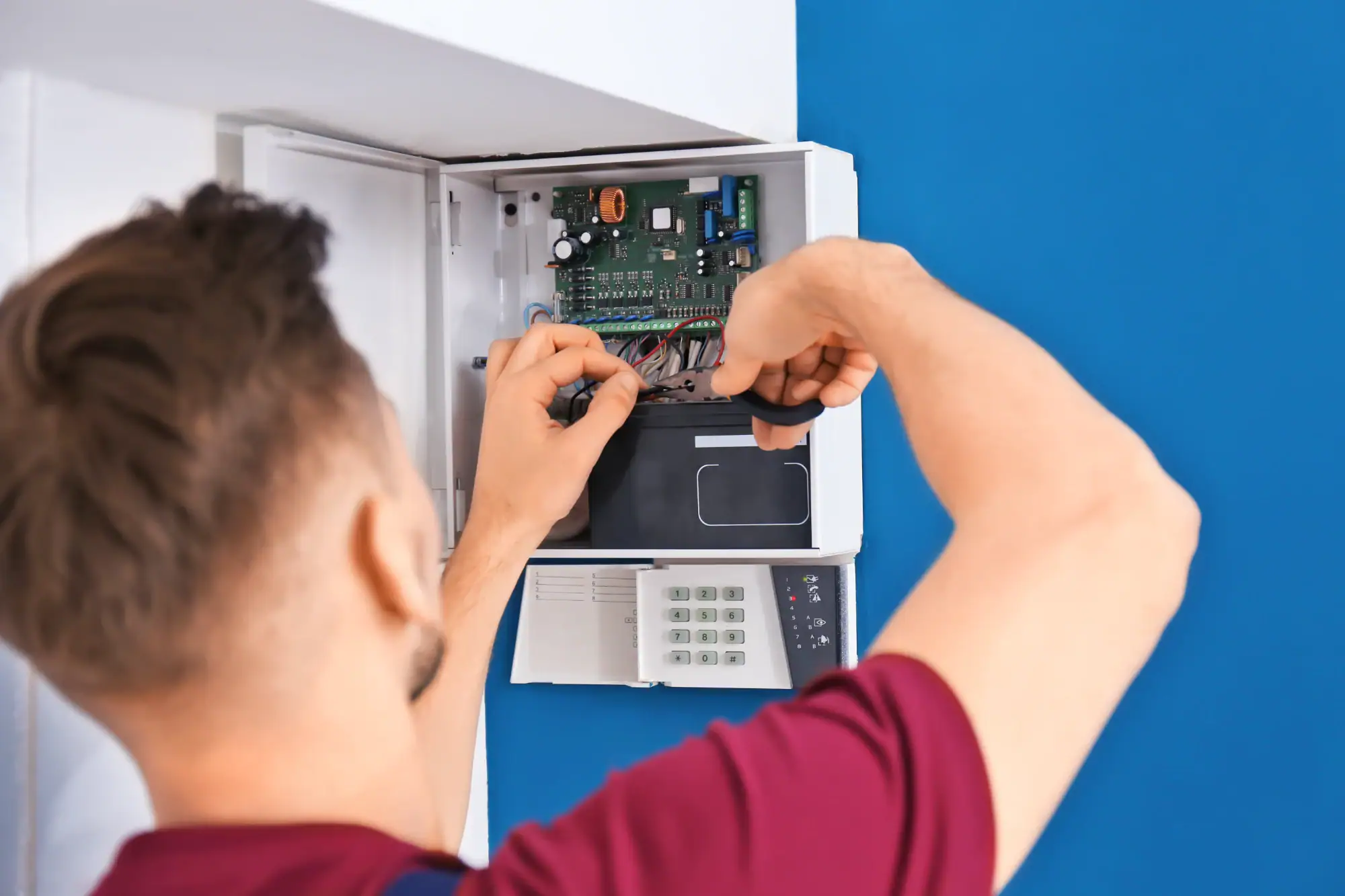
Level 2 installation follows a straightforward process that most experienced electricians can complete in a single day. The timeline and requirements are manageable for Chicago homeowners who want to start charging at home quickly.
The process begins with an electrical assessment to determine if your current panel can handle the additional 40-50 amp load. Most homes built after 1990 with 200-amp service can accommodate Level 2 charging without major upgrades. If your panel needs updating, that adds 1-2 days to the timeline and $1,000-$2,500 to the cost.
Permit requirements in Chicago are straightforward but mandatory. We pull the electrical permit, which typically costs $50-$150 and takes 1-3 business days to process. The city requires inspection after installation to ensure code compliance, but we coordinate this and it usually happens within a week of completion.
The actual installation involves running 240-volt wiring from your electrical panel to the charging location, installing a dedicated circuit breaker, and mounting the charging unit. For garage installations with the panel nearby, this typically takes 2-4 hours. More complex installations requiring longer wire runs or panel upgrades can take 4-6 hours.
Weather can affect installation timing, especially for outdoor mounting or when electrical panels are located outside. Chicago winters sometimes delay outdoor work, but most installations happen inside garages or basements where weather isn’t a factor.
The key advantage of Level 2 installation is that it uses standard electrical practices and components. Any licensed electrician familiar with residential work can handle the installation, permits, and inspection process. You’re not dependent on specialized technicians or waiting for utility company coordination.
Level 3 installation complexity puts it beyond what most Chicago homeowners can practically accomplish. The electrical requirements, permit process, and coordination with ComEd create obstacles that often make the project impossible or prohibitively expensive.
The electrical infrastructure requirements are the biggest challenge. Level 3 chargers need 480-volt three-phase power, which isn’t available in residential neighborhoods. ComEd would need to install a transformer specifically for your property, upgrade the electrical service to your home, and potentially upgrade neighborhood distribution equipment. This process requires utility engineering studies, municipal approvals, and can take 6-18 months to complete.
Permit requirements are far more complex than Level 2 installations. You’ll need electrical permits, building permits for any structural modifications, and potentially zoning variances depending on your property. Some Chicago neighborhoods have restrictions on commercial-grade electrical equipment that could prevent Level 3 installation entirely.
The installation itself requires specialized electrical contractors with experience in high-voltage commercial systems. Not every electrician can handle 480-volt installations, and those who can charge premium rates for the specialized knowledge and liability involved. Labor costs often exceed $10,000-$20,000 even before addressing the electrical infrastructure requirements.
Ongoing maintenance adds significant costs that many homeowners don’t consider upfront. Level 3 chargers are complex systems with high-voltage components that require specialized service. Annual maintenance costs typically run $2,000-$3,000, and major repairs can cost $10,000+. Many residential areas don’t have local technicians qualified to service these systems, meaning you’ll pay travel costs for specialized service calls.
The timeline for Level 3 installation can stretch 12-24 months from initial planning to completion. Utility coordination alone often takes 6-12 months, and that’s assuming ComEd approves the project and has capacity in your area. Many Chicago homeowners who start the Level 3 process eventually switch to Level 2 charging because of the complexity and delays involved.
For the vast majority of Chicago homeowners, Level 2 charging provides the right balance of speed, cost, and practicality. You get overnight charging that keeps your EV ready for daily driving, installation costs under $3,000 in most cases, and the ability to take advantage of ComEd rebates and federal tax credits that can cut your out-of-pocket costs significantly.
Level 3 charging makes sense for commercial applications where rapid turnover matters, but the $50,000+ installation costs and complex electrical requirements put it beyond what most residential properties can accommodate. The charging speed advantage doesn’t justify the expense when your car sits parked overnight anyway.
If you’re ready to move forward with EV charger installation, working with experienced electricians who understand Chicago’s electrical codes and permit requirements makes the process smooth and stress-free. We’ve been handling residential electrical installations throughout Cook County for over 25 years, and we can guide you through the entire process from initial assessment to final inspection.
Article details:
Share:
Continue learning: