Older Chicago homes often show warning signs of outdated electrical panels. Recognize the symptoms before they become safety hazards.
Share:
Summary:
Your electrical panel is the distribution center for every outlet, light, and appliance in your home. Power comes in from the utility, and the panel divides it across circuits throughout your house. Breakers act as safety switches, shutting off power when a circuit draws too much current.
Panels fail for two main reasons. Age breaks down components over time. Breakers wear out, connections loosen, and the panel itself can’t handle the heat cycling from decades of use. The second reason is capacity. A panel installed in 1975 was built for a different world—no central air running all summer, no EV chargers, no home offices with multiple computers.
Many older Chicago homes still have 60 or 100 amp service. Modern homes need 200 amps to safely handle today’s electrical load. When you push an old panel beyond its limits, you’re not just risking inconvenience. You’re creating conditions for electrical fires.
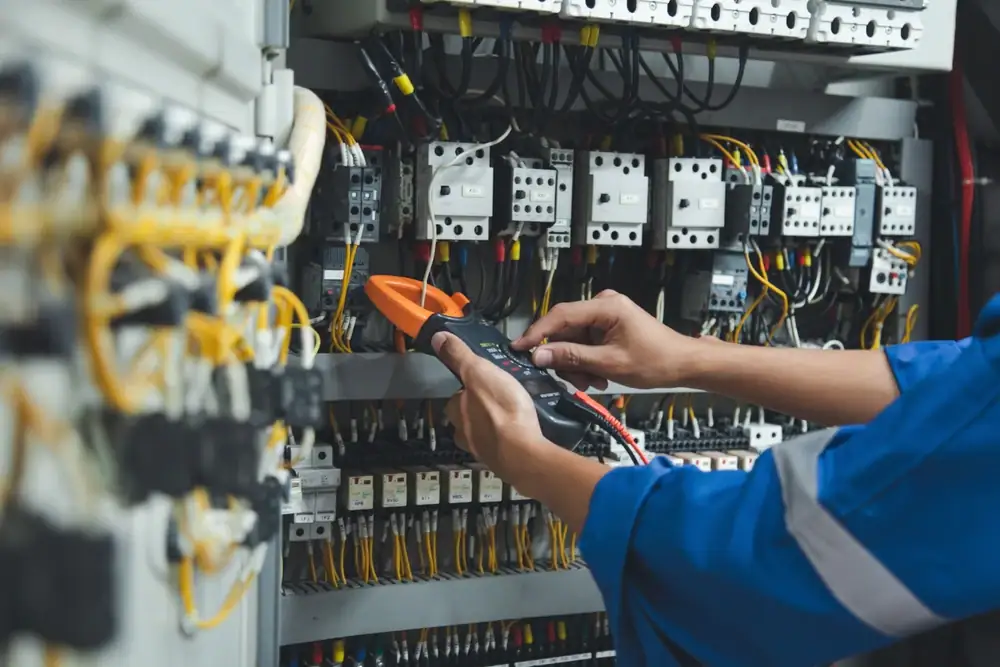
Breakers trip occasionally. That’s normal. They’re doing their job by cutting power when a circuit gets overloaded. But if you’re resetting breakers weekly or even daily, that’s your panel telling you it can’t keep up.
Each circuit in your home is rated for a specific amperage, usually 15 or 20 amps for general use. When you plug in too many devices or run high-draw appliances on the same circuit, the breaker trips to prevent the wiring from overheating. In an older home with an undersized panel, you don’t have enough circuits to spread the load properly.
You might notice the kitchen breaker trips when you run the microwave and coffee maker at the same time. Or the bathroom circuit cuts out when someone uses a hair dryer while the space heater is on. These aren’t coincidences. Your panel is maxed out.
Here’s what makes this dangerous. Some homeowners get frustrated and upgrade to higher-amp breakers without upgrading the wiring. That defeats the safety mechanism. The breaker won’t trip, but now the wiring is carrying more current than it’s rated for. That’s how electrical fires start.
The solution isn’t learning which appliances you can’t use together. It’s upgrading to a panel that gives you the capacity and circuit space you actually need. In Cook County and Will County, a 200 amp panel provides enough headroom for modern life without constantly managing your electrical usage like a puzzle.
If your breakers trip and won’t reset, that’s an even more urgent sign. It usually means the breaker itself has failed or there’s a serious fault in the circuit. Either way, you need a licensed electrician to diagnose the problem before you keep trying to force it back on.
Lights that flicker or dim when you turn on the air conditioner or start the dryer aren’t just annoying. They’re showing you that your electrical system is struggling to handle the load. When a high-draw appliance kicks on, it pulls significant power. If your panel and wiring can’t deliver that power smoothly, you’ll see voltage drops throughout the house.
This happens most often in homes with 100 amp service or less. The panel doesn’t have enough capacity to handle the surge from major appliances without affecting other circuits. You might see lights dim for a second when the refrigerator compressor starts, or notice a flicker when someone turns on a space heater.
The problem gets worse over time. As your panel ages and connections loosen, resistance increases. That makes voltage drops more pronounced. What started as a barely noticeable flicker becomes an obvious dimming that happens multiple times a day.
Flickering lights can also indicate loose wiring at the panel, which creates heat and increases fire risk. If you see lights flickering in just one room, the issue might be isolated to that circuit. But if lights throughout the house dim when appliances start, your panel is the likely culprit.
Some Chicago homeowners live with this for years, assuming it’s just how old houses work. It’s not. Modern electrical systems deliver stable power regardless of what appliances are running. When yours can’t do that anymore, it’s time to upgrade.
The electrical panel upgrade cost in Chicago typically ranges from $1,300 to $2,500 for a 200 amp service, which solves these voltage drop issues and gives you room for future electrical needs. That’s a worthwhile investment compared to the risk of continuing with an inadequate system.
Want live answers?
Connect with a Jimco Electric expert for fast, friendly support.
Some electrical panel problems go beyond inconvenience into genuine safety hazards. Burning smells, warm panels, and buzzing sounds all indicate serious issues that need professional attention right away. These are the signs that electrical fires start from.
A properly functioning panel should never feel warm to the touch or emit any odor. If your panel feels hot or you smell burning plastic, shut off the main breaker if it’s safe to do so and call a licensed electrician immediately. Don’t wait to see if it goes away.
Buzzing, sizzling, or crackling sounds from the panel mean electrical arcing is happening inside. That’s electricity jumping across gaps it shouldn’t, creating heat and sparks. This damages components and can ignite surrounding materials.
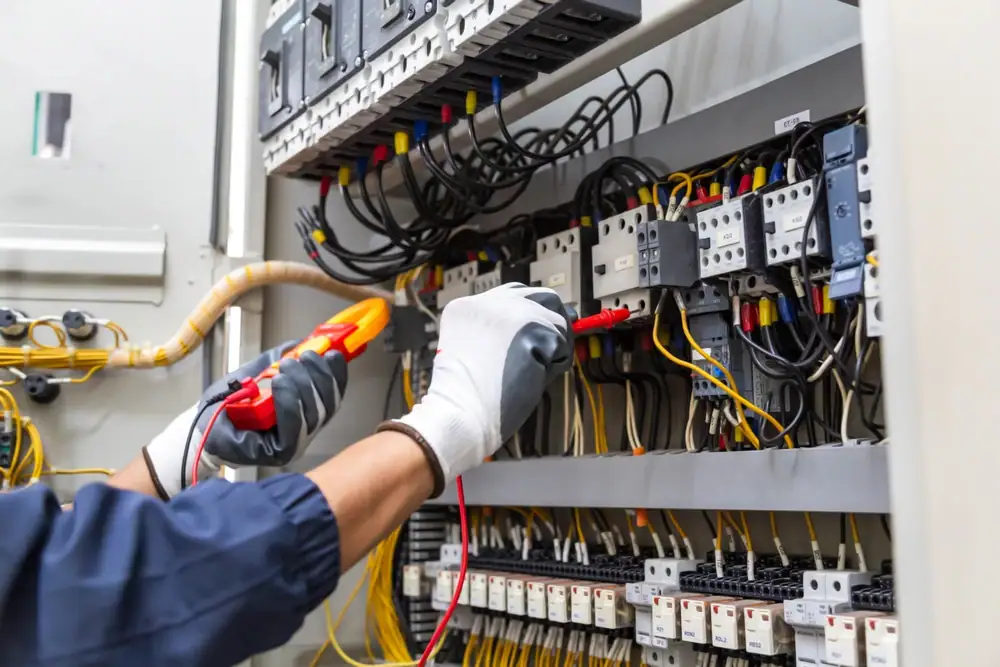
A burning smell near your electrical panel is never normal. It usually means wire insulation is melting from excessive heat, connections are failing, or breakers are overheating. All of these conditions can lead to electrical fires.
The smell might be subtle at first, like hot plastic or a metallic burning odor. Some homeowners notice it only when standing right next to the panel. Don’t dismiss it because it’s faint. By the time the smell is obvious throughout the room, significant damage has already occurred.
Heat at the panel comes from resistance in connections or breakers that are carrying more current than they should. As metal heats up and cools down repeatedly, connections can loosen further, creating even more resistance and heat. It’s a cycle that gets progressively worse.
In older Chicago homes, this often happens because the panel is simply too small for current demands. A 60 or 100 amp panel running near capacity will generate heat. Add in decades-old breakers that don’t trip as reliably as they should, and you have conditions for a fire.
If you touch your panel and it feels warm or hot, that’s a clear sign something is wrong. The panel itself shouldn’t generate heat. The warmth you’re feeling is coming from failing components or overloaded circuits. This requires immediate evaluation by a licensed electrician who can identify the source and recommend solutions.
Many electrical fires happen inside walls where you can’t see them until it’s too late. A hot panel or burning smell gives you advance warning. Take it seriously. The cost of an electrical panel replacement is insignificant compared to the cost of a house fire.
Homes built before the 1970s were designed for a different era. No central air conditioning running for months. No computers, wifi routers, and smart home devices drawing power constantly. No electric vehicle chargers that pull 30 amps for hours every night. The electrical systems in these homes simply weren’t built for how we live now.
If you’re planning to install an EV charger, upgrade to central air, or add any major appliance, your existing panel might not have the capacity. A Level 2 EV charger alone adds about 7,200 watts to your home’s electrical load. That’s a significant draw that a 100 amp panel often can’t accommodate safely, especially when you’re already running other appliances.
The same goes for modern kitchen renovations. Today’s kitchens have induction cooktops, large refrigerators, dishwashers, and multiple small appliances all running simultaneously. Building codes now require dedicated circuits for many of these, and older panels don’t have the space or capacity for the additional breakers.
You’ll know your panel can’t keep up when electricians tell you they can’t add new circuits without upgrading the panel first. Or when you try to install something and discover your panel is completely full with no empty breaker slots. Some homeowners try to work around this with tandem breakers that fit two circuits in one slot, but that’s just delaying the inevitable upgrade.
In Cook County and Will County, many homes still operate on electrical systems installed 40 or 50 years ago. Those systems worked fine for their time, but they’re inadequate now. Upgrading to a 200 amp panel isn’t about luxury. It’s about having an electrical system that matches how you actually use your home.
The breaker panel upgrade cost in Illinois typically ranges from $850 to $4,000 depending on the amperage you need. For most homeowners, a 200 amp upgrade falls between $1,300 and $2,500. That’s an investment in functionality and safety. You’re not just buying more capacity. You’re buying the ability to use your home the way modern homes are meant to function, without constantly managing which appliances can run at the same time or worrying about overloading circuits.
Electrical panel problems don’t fix themselves, and they don’t get better with time. If you’re experiencing frequent breaker trips, flickering lights, burning smells, or any of the warning signs you need an electrical panel upgrade, the right move is getting a professional evaluation. A licensed electrician can assess your current panel, calculate your home’s electrical load, and recommend the appropriate upgrade.
Old electrical panel replacement isn’t a DIY project. It requires working with live electrical service, understanding local codes, pulling permits, and coordinating with your utility company. In Chicago, this work must be done by licensed contractors who know the specific requirements for Cook County and Will County.
The good news is that upgrading your panel solves multiple problems at once. You eliminate safety hazards, gain capacity for modern appliances, stop dealing with constant breaker trips, and increase your home’s value. For Chicago-area homeowners dealing with aging electrical systems, it’s one of the most important upgrades you can make. We have 25 years of experience helping homeowners with electrical panel upgrades and emergency electrical repairs throughout Cook County and Will County, providing the licensed, bonded, and insured professional service you need to keep your home safe and functional.
Article details:
Share:
Continue learning: