
Hear from Our Customers
When your circuit breaker keeps tripping at 9 PM, you don’t need a lecture about electrical theory. You need someone who answers the phone, shows up when they say they will, and fixes the problem so you can get back to your life.
That’s what a local electrical company in Shorewood should do. No vague estimates. No disappearing for days. No “we’ll have to come back” unless it’s actually necessary.
You call with flickering lights or a burning smell near an outlet, and you get a licensed electrician who’s handled that exact issue in dozens of Shorewood homes. The problem gets diagnosed correctly the first time. The repair gets done right. Your family stays safe.
Most electrical problems don’t fix themselves. They get worse. The outlet that’s warm today might be sparking next week. The breaker that trips occasionally might fail completely when you’re running your AC and charging your car. Waiting costs you more—in repairs, in safety risks, and in the hassle of dealing with a bigger emergency later.
We’ve spent 25 years as a residential and commercial electrical company serving Shorewood and the surrounding area. We’re licensed, bonded, and insured, which matters when someone’s working inside your walls with 240 volts.
Most of our work is residential. Emergency repairs, panel upgrades, adding circuits for EV chargers, fixing code violations before they become problems. We also handle commercial projects, but our focus is helping homeowners who need reliable electrical service without the drama.
Shorewood’s housing stock includes plenty of homes built before electrical codes caught up with modern demand. Your 200-amp panel might’ve been fine in 2005, but add a heat pump, an electric range, a Level 2 EV charger, and a few smart home devices, and suddenly you’re tripping breakers every time you run the dryer. We upgrade panels, add circuits, and make sure your electrical system can actually handle how you live now—not how people lived 20 years ago.
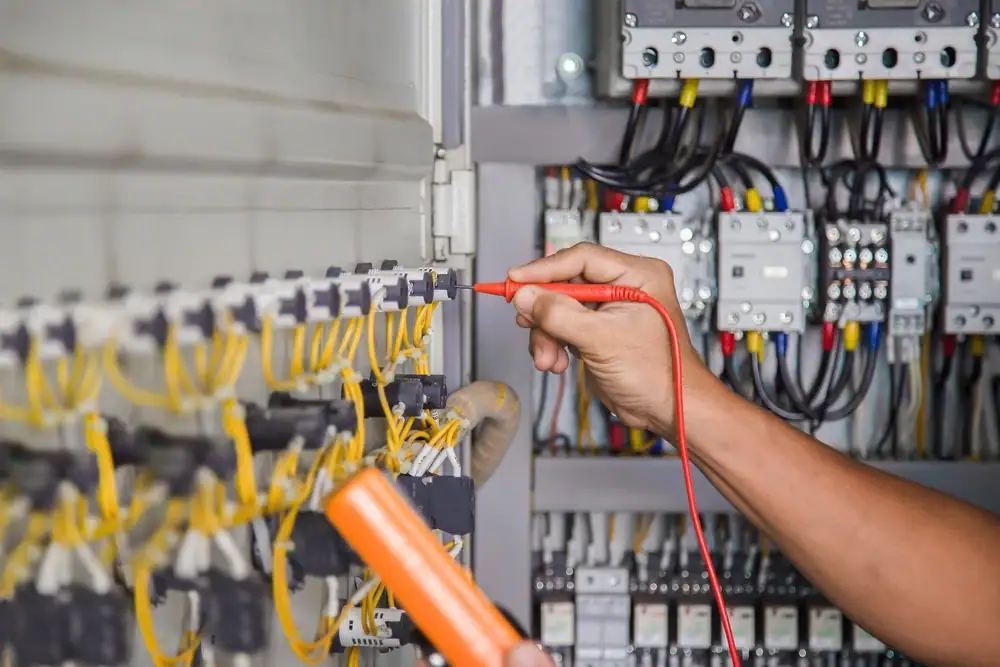
You call or submit a request online. We ask a few questions about what’s going on—what you’re seeing, hearing, or smelling. That helps us know what to bring and how urgent the situation is.
We give you an arrival window and show up during it. Our electrician assesses the problem, explains what’s wrong in plain language, and gives you an upfront price before any work starts. No surprise charges later.
If it’s something straightforward like a tripped GFCI outlet or a worn breaker, we fix it on the spot. If it’s more involved—say, your panel needs an upgrade or you’ve got outdated wiring that’s not up to code—we walk you through what needs to happen, why it matters, and what it’ll cost. Then you decide.
Once the work’s done, we test everything to make sure it’s working safely. We clean up. We answer your questions. If you’re eligible for one of our discounts—military, first responder, senior, teacher, student, or new customer—we apply it. Then we’re out of your way.
You shouldn’t have to wonder whether your electrical system is safe or guess when someone’s going to show up. We’ve been doing this long enough to know that clarity and reliability matter more than anything else.
Ready to get started?
You get someone who knows Shorewood’s housing and understands the electrical issues common in this area. Older homes with undersized panels. Newer builds where the builder cut corners on outlet placement. Properties where the previous owner did their own wiring and created a mess you’re now dealing with.
We handle emergency repairs—power outages, breakers that won’t reset, outlets that spark, lights that flicker for no clear reason. We also handle the planned stuff: panel upgrades, adding circuits for EV chargers, installing whole-home surge protection, and running new wiring for home additions or finished basements.
Shorewood’s average electricity rate is 14.66 cents per kWh. That’s not outrageous, but it adds up fast if your system’s inefficient or you’re running outdated equipment that pulls more power than it should. We’ll point out where you’re wasting energy and what upgrades would actually save you money over time.
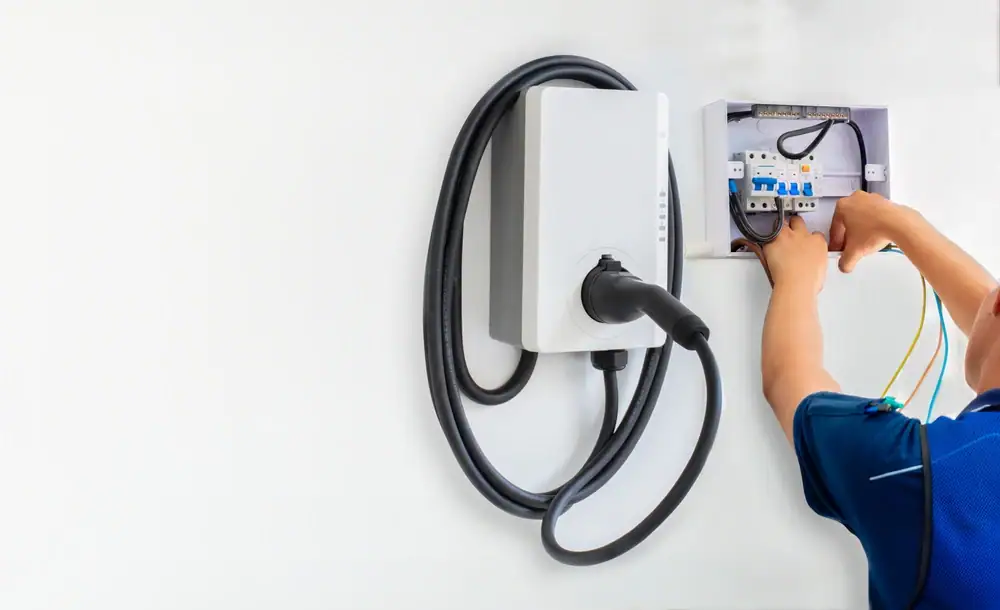
If you’re adding an EV charger, you probably need a dedicated 240-volt circuit and possibly a panel upgrade. Most homes weren’t built to handle that load on top of everything else you’re already running. We size the system correctly so you’re not choosing between charging your car and running your AC.
We’re also seeing more requests for smart home integration—wiring for automated lighting, security systems, and connected devices. If that’s on your list, we’ll make sure your electrical system can support it without overloading circuits or creating safety risks.
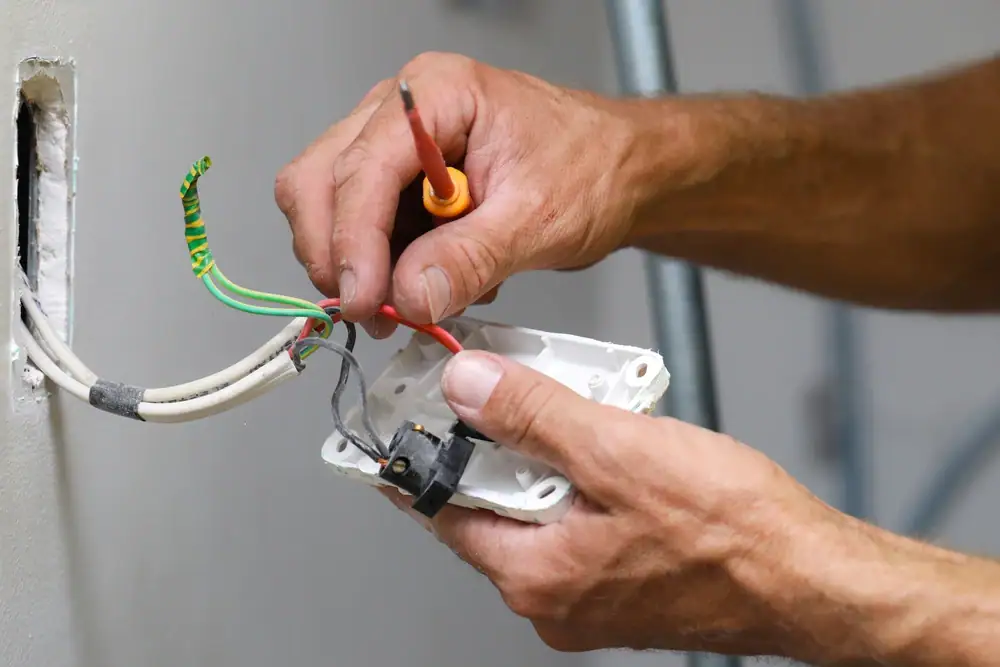
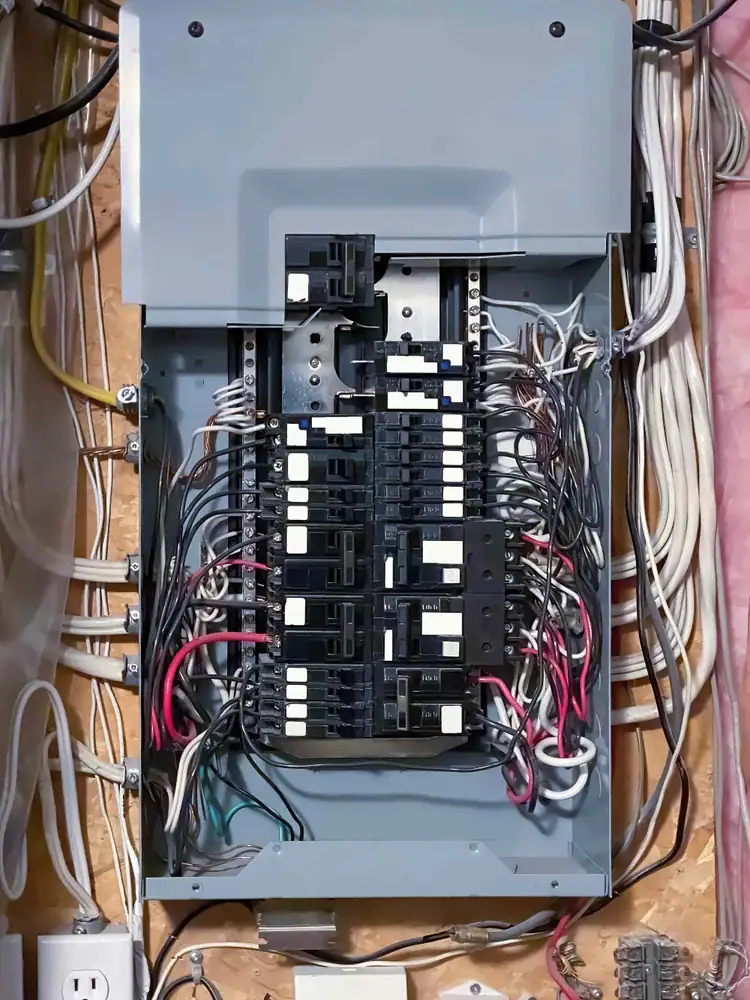
Your panel probably needs an upgrade if your breakers trip frequently, especially when you’re running multiple appliances at once. That’s your electrical system telling you it can’t handle the load.
Other signs: your panel is warm to the touch, you smell burning near it, you see rust or corrosion, or it’s an older Federal Pacific or Zinsco panel that’s known for safety issues. If your home was built before 1990 and still has the original panel, there’s a good chance it’s undersized for how you use electricity today.
Most older panels are 100 or 150 amps. Modern homes typically need 200 amps, especially if you’re adding an EV charger, heat pump, or other high-draw equipment. Upgrading your panel isn’t just about convenience—it’s about safety. An overloaded panel is a fire risk.
Stop using that outlet or switch immediately. Don’t plug anything into it. Don’t flip the switch. A burning smell means something’s overheating—wiring, connections, or the device itself.
If the smell is strong or you see smoke, turn off the breaker for that circuit and call an electrician right away. If you’re not sure which breaker controls that outlet, turn off your main breaker and call us. Don’t wait to see if it goes away. Electrical fires start small.
Burning smells usually mean loose connections, damaged wiring, or an outlet that’s been overloaded for too long. All of those are fixable, but they don’t fix themselves. The longer you wait, the more dangerous it gets.
It depends on your current electrical setup. If you’ve got a 200-amp panel with available capacity and your garage is close to your panel, installation might run $800 to $1,500 for a basic Level 2 charger.
If your panel’s already maxed out or you need a service upgrade, you’re looking at $2,000 to $4,000 or more. That includes the panel upgrade, running a new 240-volt circuit, installing the charger, and bringing everything up to code.
We’ll assess your system before giving you a price. Some homes need a load calculation to figure out whether your current panel can handle the extra draw. Others need a full service upgrade. We don’t guess—we measure, calculate, and give you an accurate number before we start.
Yes. Electrical problems don’t wait for business hours, and neither do we. If you’ve got a power outage, a breaker that won’t stop tripping, or something that smells like it’s burning, call us.
We’ll ask you a few questions to figure out how urgent the situation is. If it’s a safety issue, we’ll get someone out as quickly as possible. If it’s something that can wait until morning without putting you at risk, we’ll tell you that too.
Emergency service costs more than scheduled work—that’s standard across the industry. But you’re paying for availability, fast response, and someone who knows what they’re doing showing up when you actually need help. We’ll give you the price upfront so there’s no confusion later.
Most panel upgrades take four to eight hours, depending on the complexity of your system and whether we’re also upgrading your service from the utility connection. If your home has older wiring that needs updating or we’re relocating the panel, it might take longer.
Your power will be off during part of the work. We’ll coordinate with you on timing so it’s as minimally disruptive as possible. If you work from home or have medical equipment that needs power, let us know in advance so we can plan around it.
Once the new panel’s installed, we’ll test every circuit, make sure everything’s labeled correctly, and walk you through how it works. You’ll also get documentation for your records and for any future home sale. A permitted, inspected panel upgrade adds value and gives buyers confidence that your electrical system is safe and up to code.
A licensed electrician has completed years of training, passed state exams, and carries insurance that protects you if something goes wrong. A handyman might know how to swap out a light fixture, but they’re not qualified to diagnose complex electrical problems or work inside your panel.
Electrical work in Illinois requires a license for a reason. Mistakes can cause fires, electrocution, or damage to your home’s wiring that costs thousands to fix. If someone without a license does the work and something goes wrong, your homeowner’s insurance might not cover it.
We’re licensed, bonded, and insured. That means we’re accountable to the state, we follow code, and if there’s ever an issue, you’re protected. It also means our work can be inspected and permitted, which matters when you sell your home. Buyers and their inspectors will ask questions if they find unpermitted electrical work. Save yourself the headache and hire someone who’s actually qualified from the start.