
Hear from Our Customers
You flip a switch and nothing happens. Or worse—something sparks, smells wrong, or trips again the second you reset it. That’s not a minor inconvenience. That’s your home telling you something’s failing, and it won’t fix itself.
When you call a local electrician in South Chicago Heights who actually knows emergency electrical repairs, you get someone who shows up, finds the problem, and explains what’s happening in plain terms. No upselling a whole rewire when you need a circuit fixed. No waiting three days while your fridge defrosts.
You get your power back, your safety restored, and a clear answer about whether this is a one-time fix or something that needs attention before it gets worse. Most electrical problems don’t announce themselves politely. They show up as a burning smell, a breaker that won’t stay on, or outlets that stopped working in half your kitchen. We’ve seen it thousands of times, and we know how to fix it right the first time.
We’ve been handling residential electrical work in South Chicago Heights for 25 years. We’re licensed, bonded, and insured—not because it sounds good in an ad, but because it’s the baseline for doing this work correctly and protecting you if something goes sideways.
Most of our calls are emergencies. Panels that won’t stop tripping. Outlets that spark. Lights that flicker when the AC kicks on. These aren’t problems you can schedule around, so we’re available 24/7. We also offer discounts for military, first responders, seniors, teachers, and students—because if you’re serving this community, we’d rather make it easier for you to get help when you need it.
South Chicago Heights homes average around $140,000 in value, and many were built decades ago when electrical demands were a fraction of what they are now. Your home might need 50% more capacity than it was designed for. We see that every week.
You call or text with the problem. We ask a few questions to understand what’s going on—what stopped working, when it started, whether you’re seeing sparks or smelling anything unusual. That helps us know what to bring and how urgent it is.
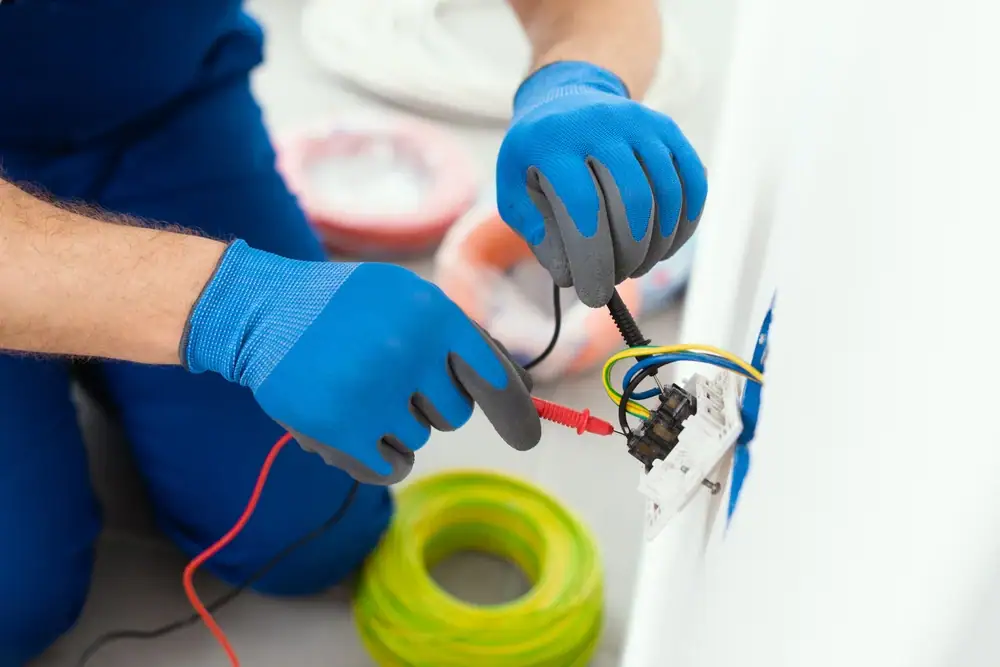
We show up, usually the same day for emergencies. First thing we do is a safety check, especially if there’s any chance of fire or shock risk. Then we trace the issue—testing circuits, checking your panel, inspecting wiring and connections until we find what’s failing.
Once we know what’s wrong, we walk you through it. What broke, why it happened, what it’ll take to fix it, and what it costs. If there’s a bigger issue brewing—like an undersized panel that’s going to keep tripping—we’ll tell you that too, but we’re not going to push you into work you don’t need right now.
After you approve the work, we fix it. We test everything before we leave, and we make sure you understand what we did. If it’s an electrical inspection or something that needs a permit, we handle that too. You shouldn’t have to call us back for the same problem.
Ready to get started?
Every service call starts with a safety assessment. If you’ve got a burning smell or visible damage, we’re checking for fire risk before we do anything else. From there, it depends on what you need—but most calls involve circuit breaker repairs, panel upgrades, outlet replacements, or electrical wiring fixes.
If you’re adding an EV charger, we’ll assess whether your current panel can handle the load or if you need a service upgrade first. A lot of South Chicago Heights homes are still running 100-amp panels, and a Level 2 charger pulls 40-50 amps on its own. That doesn’t leave much room for your AC, dryer, and oven to run at the same time.
We also handle electrical inspections—whether you’re buying a home, selling one, or just want to know if your system is safe. Given that 63% of homeowners worry about power reliability during extreme weather, and Illinois gets both brutal winters and summer storms, it’s worth knowing if your electrical system can handle the load before it fails during a heat wave.
If your lights dim when the fridge kicks on, or your breaker trips every time you run the microwave and toaster together, that’s not normal. It means your circuits are overloaded, your panel is undersized, or your wiring is deteriorating. We’ll figure out which one it is and fix it.
Emergency calls typically run $100 to $200 just to come out, and that’s before any repair work. Standard electrical repairs during business hours usually cost $50 to $100 per hour, but after-hours, weekends, and holidays cost more because you’re pulling someone away from their family or sleep to fix your power.
The actual repair cost depends entirely on what’s wrong. Replacing a faulty outlet might be $150 total. Upgrading a 100-amp panel to 200 amps could run $2,000 to $4,000 depending on how much rewiring is involved and whether we need to upgrade your service line from the street.
We’ll give you an upfront estimate before we start the work. If we find something else while we’re in there—like damaged wiring or a panel that’s not up to code—we’ll explain what it is, why it matters, and what it’ll cost to fix. You decide whether to handle it now or later. We’re not going to surprise you with a bill that’s double what you expected.
Anything involving fire, smoke, burning smells, or sparks is an emergency. If you see flames, smell burning plastic, or notice scorch marks around outlets or your panel, shut off power at the main breaker if you can do it safely, and call us immediately.
Electrical shocks from outlets or appliances are also emergencies. If you touch a switch or appliance and get shocked, something’s wrong with your grounding or wiring, and it could kill someone next time. Same goes for outlets or switches that are hot to the touch—that’s a fire waiting to happen.
Total power loss can be an emergency depending on the situation. If your whole house loses power but your neighbors still have theirs, the problem is in your system—not the grid—and it could be a failed main breaker, damaged service line, or panel issue. If you’ve got extreme heat or cold, or if you’ve got medical equipment that needs power, that’s urgent. Breakers that keep tripping after you reset them are also a red flag that something’s overloaded or failing.
If your panel is over 25 years old, you’re tripping breakers regularly, or you’re adding major appliances like an EV charger or central AC, then yes—you probably need an upgrade. Most older homes in South Chicago Heights were built with 100-amp panels, and that’s not enough for modern electrical loads.
Here’s the math: a central AC unit pulls 15-20 amps. An electric dryer pulls another 20-30. A Level 2 EV charger pulls 40-50. Add in your fridge, microwave, oven, and water heater, and you’re already over 100 amps before you turn on a single light. When you exceed your panel’s capacity, breakers trip, wires overheat, and you’re at serious risk for an electrical fire.
Upgrading to a 200-amp panel gives you room to run everything safely without constantly resetting breakers or worrying about starting a fire. It also brings your system up to current code, which matters if you ever sell your home. Most buyers’ inspections will flag an outdated or undersized panel, and you’ll end up paying for the upgrade anyway—except now you’re negotiating from a weak position.
Flickering or dimming lights are the first sign. If your lights dim when you turn on the AC or run the microwave, your wiring is either undersized for the load or deteriorating. Outlets that don’t work, work intermittently, or only work if you wiggle the plug are also red flags—that’s a loose connection, and loose connections create heat and fire risk.
Burning smells or discolored outlets are serious. If you smell burning plastic or see black or brown scorch marks around an outlet or switch, shut off power to that circuit immediately and call us. That’s active overheating, and it can ignite surrounding materials. Same goes for outlets or switches that feel warm or hot to the touch.
Aluminum wiring is another issue. Homes built in the 1960s and 70s often used aluminum instead of copper, and aluminum connections degrade over time, creating fire hazards. If your home was built during that period and you’ve never had the wiring inspected, you should. According to the U.S. Fire Administration, faulty wiring causes thousands of residential fires every year, and most of them were preventable with an inspection and repair.
If it’s a safety issue—sparks, burning smells, shocks, or breakers that won’t stay on—you shouldn’t wait. Electrical fires don’t give you a warning. They start in your walls where you can’t see them, and by the time you notice, it’s too late. Faulty wiring is one of the leading causes of house fires, and most of those fires happened because someone knew there was a problem and put off fixing it.
If it’s a convenience issue—like an outlet that doesn’t work or a light fixture that’s out—you’ve got more flexibility. But even minor problems can be symptoms of bigger issues. An outlet that stopped working might mean a tripped GFCI, or it might mean a loose connection that’s arcing inside your wall. We won’t know until we check.
Here’s the other thing: 61% of homeowners delay repairs because of cost, and 24% wait six months or longer. But electrical problems don’t get better with time. They get worse. A small repair today can prevent a major failure or fire tomorrow. Given that a quarter of homeowners have $500 or less saved for emergencies, we get why people wait—but this isn’t the repair to gamble on.
Because electrical work kills people who don’t know what they’re doing, and it burns down houses when it’s done wrong. You’re working with enough voltage to stop your heart, and if you make a mistake—cross a wire, miss a ground, overload a circuit—you won’t know until something catches fire or someone gets hurt.
Licensed electricians spend years learning how to work safely with live electrical systems. We know how to test circuits, identify hazards, and install wiring that meets code. We’re also insured, which means if something does go wrong, you’re covered. If you do it yourself and cause a fire, your homeowner’s insurance can deny your claim because you performed unpermitted electrical work.
South Chicago Heights requires permits for most electrical work, and inspections to make sure it’s done correctly. If you sell your home and the buyer’s inspector finds unpermitted electrical work, you’ll have to pay to bring it up to code or risk losing the sale. It’s not worth the risk or the headache. Hire someone who knows what they’re doing, get it done right, and move on with your life.