Many Chicago-area homes have outdated electrical systems that create safety risks and insurance problems. Discover why electrical wiring upgrades matter for older properties.
Share:

Summary:
Homes built before 1990 in Cook County and Will County weren’t designed for the electrical demands of modern life. Back then, a typical household had a fraction of the devices you use today. No home offices. No charging stations. No central air running all summer. The wiring that powered a few lamps and a refrigerator simply can’t handle what you’re asking it to do now.
That’s not a theory. It’s physics. When you overload outdated wiring, things heat up. Connections loosen. Insulation breaks down. And the risks start piling up—from constant breaker trips to actual fire hazards.
According to the National Fire Protection Association, electrical distribution and lighting equipment caused an average of 31,647 home fires every year between 2011 and 2023. Those fires resulted in 425 deaths annually and $1.6 billion in property damage. Many of those fires trace back to outdated or overloaded electrical systems in older homes.
If your home was built before the 1950s, there’s a decent chance it still has knob-and-tube wiring somewhere in the walls. This system uses ceramic knobs and tubes to hold individual wires in place. It worked fine when it was installed. It doesn’t work fine now.
The biggest problem isn’t the copper wire itself—that can last 100 years. The problem is the insulation. Knob-and-tube wiring used cloth, rubber, or fabric insulation that deteriorates over time. When that insulation breaks down, you’re left with exposed wires inside your walls. That’s a fire hazard. It’s also an electrocution risk if anyone ever works on the system without knowing what they’re dealing with.
There’s another issue. Knob-and-tube wiring has no grounding conductor. Modern electrical systems include a ground wire that provides a safe path for electricity if something goes wrong. Without it, you’re at higher risk of shocks and surges. Most modern appliances expect a grounded outlet. If your home doesn’t have that, you’re either using adapters (which don’t actually ground anything) or you’re risking damage to your electronics.
Insurance companies know all of this. Many won’t cover homes with knob-and-tube wiring at all. Others will, but they’ll charge you significantly more. Some will give you a deadline to replace it or they’ll cancel your policy. If you’re trying to sell your home, buyers and inspectors will flag it immediately. It’s one of those things that stops deals in their tracks.
Replacing knob-and-tube wiring isn’t cheap. The average cost ranges from $12,000 to $35,000 depending on the size of your home and how accessible the wiring is. But it’s also one of those investments that protects your family, satisfies your insurance company, and makes your home sellable when the time comes.
Between the mid-1960s and mid-1970s, aluminum wiring was everywhere. It was cheaper than copper, and builders used it widely during a construction boom. If your home was built during that window, there’s a good chance you have aluminum wiring.
Aluminum isn’t inherently dangerous, but it behaves differently than copper. It expands and contracts more with temperature changes. Over time, that movement loosens connections at outlets, switches, and junction boxes. Loose connections create resistance. Resistance creates heat. Heat creates fire risk.
According to the U.S. Consumer Product Safety Commission, homes with aluminum wiring are 55 times more likely to have outlets that present a fire hazard compared to homes with copper wiring. That’s not a small difference.
You can’t always tell if you have aluminum wiring just by looking at your outlets. The best way to know is to have a licensed electrician inspect your system. If you do have aluminum wiring, you have options. Complete rewiring with copper is the most permanent solution, typically costing $12,000 to $25,000. But there are also approved retrofit methods that make aluminum connections safer without replacing every wire. These involve special connectors like COPALUM crimps that create secure, permanent connections between aluminum and copper.
Insurance companies treat aluminum wiring similarly to knob-and-tube. They’ll either charge you more, require an inspection and remediation, or decline coverage altogether. If you’re planning to sell, expect buyers to ask questions. Home inspectors will note it in their reports, and it often becomes a negotiating point—or a deal-breaker.
The good news is that aluminum wiring can be addressed. You don’t necessarily have to tear out every wall. We can evaluate your specific situation and recommend the most cost-effective approach that satisfies safety requirements and insurance concerns.
Want live answers?
Connect with a Jimco Electric expert for fast, friendly support.
Your electrical panel is the heart of your home’s power system. It’s where electricity enters your house and gets distributed to every room. If your panel is outdated or undersized, it becomes a bottleneck. Everything downstream suffers.
Most homes built before 1990 have 60-amp or 100-amp panels. That was fine when households had fewer electrical demands. It’s not fine now. Modern homes typically need 200-amp service to handle HVAC systems, kitchen appliances, home offices, EV chargers, and all the other devices that draw power throughout the day.
When your panel can’t keep up, you’ll notice. Breakers trip constantly. Lights dim when the air conditioner kicks on. You can’t run multiple appliances at the same time without resetting something. That’s not just annoying—it’s a sign your system is overloaded.
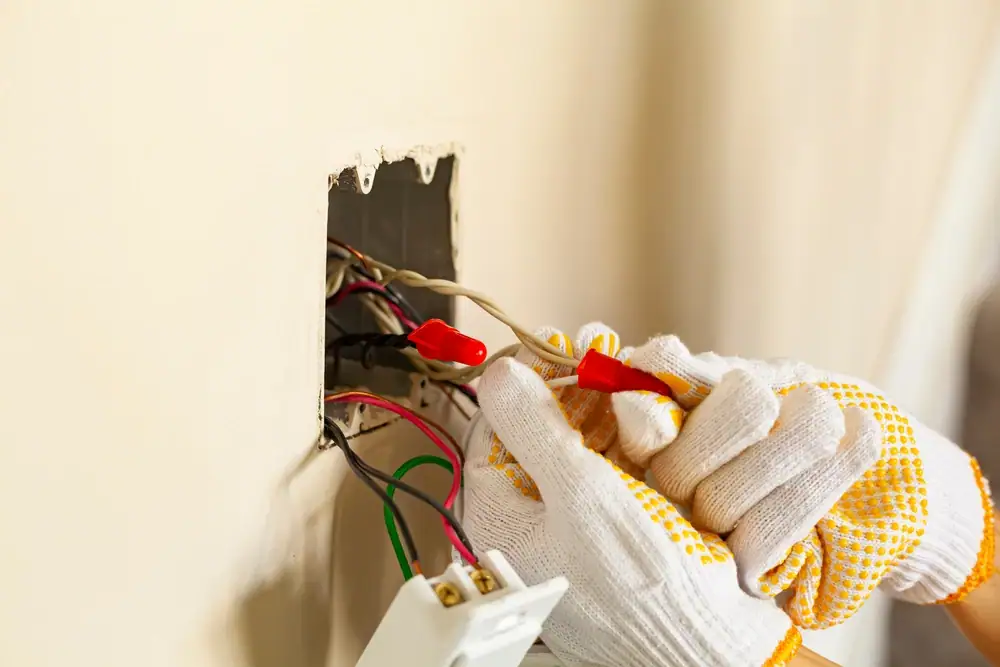
Upgrading your electrical panel in Cook County or Will County isn’t as simple as swapping out the box. The process involves coordination with your utility company, permits from your local municipality, and inspections to ensure everything meets current electrical codes.
Here’s what actually happens. First, we evaluate your current system and determine what size panel you need. For most residential upgrades, that means going from 100 amps to 200 amps. We then pull the necessary permits—this is required by law in both Cook and Will Counties for panel work.
Next comes coordination with your utility company. They need to disconnect power at the meter so the panel can be safely replaced. That usually happens on the same day as the installation. You’ll be without power for a few hours, but we plan the work to minimize disruption.
The actual installation involves removing your old panel, installing the new 200-amp panel, connecting all your circuits, running proper grounding, and ensuring everything is labeled correctly. Once the work is done, an inspector from your local building department comes out to verify that everything meets code. Only after that inspection passes does the job get finalized.
The cost for a panel upgrade in the Chicago area typically ranges from $1,300 to $2,500 for a 200-amp system. That includes the panel itself, labor, permits, and inspection fees. If additional work is needed—like upgrading the service line from the street or adding new circuits—the cost goes up.
Most residential panel upgrades take one to two days to complete. The timeline can stretch if there are complications with utility coordination or if we discover other issues that need to be addressed. But with 25 years of experience working in Cook and Will Counties, we know the local requirements and can usually keep things moving smoothly.
You don’t need to be an electrician to spot the warning signs of an outdated panel. Some are obvious. Others are subtle but just as important.
Frequent breaker trips are the most common indicator. If you’re constantly resetting breakers, your panel is telling you it can’t handle the load. That’s not a defect—it’s the panel doing its job by shutting off power before wires overheat. But if it’s happening regularly, you’re pushing your system beyond its capacity.
Flickering or dimming lights, especially when appliances turn on, suggest your panel is struggling to distribute power evenly. This happens when the electrical demand exceeds what the panel can deliver. It’s particularly common in older homes when the HVAC system kicks in or when multiple high-draw appliances run simultaneously.
If your panel feels warm to the touch, that’s a red flag. Panels should not generate heat. If yours does, it means connections are loose or components are failing. That creates fire risk and needs immediate attention from a licensed electrician.
Burning smells near your panel are an emergency. Don’t ignore them. Shut off power at the main breaker if you can do so safely, and call us immediately. That smell indicates overheating, which can lead to electrical fires.
Visible rust, corrosion, or signs of moisture around your panel also signal problems. Water and electricity don’t mix. If moisture has gotten into your panel, components may be corroded and unsafe.
Finally, if you still have a fuse box instead of a breaker panel, it’s time to upgrade. Fuse boxes were standard decades ago, but they’re not designed for modern electrical loads. They also lack the safety features that circuit breakers provide. Most insurance companies view fuse boxes as outdated and will require replacement.
Certain panel brands are known to be problematic. Federal Pacific Electric (FPE) panels, installed in millions of homes from the 1950s through the 1980s, have circuit breakers that fail to trip when they should. That creates serious fire risk. Zinsco panels, popular in the 1970s, have similar issues. If you have either of these brands, replacement isn’t optional—it’s a safety necessity.
Upgrading your home’s electrical system isn’t the most glamorous project. You won’t see it when it’s done. Your friends won’t compliment it when they visit. But it’s one of those foundational investments that protects everything else.
The safety benefits are real. Modern wiring eliminates fire hazards from deteriorated insulation and overloaded circuits. Proper grounding protects you and your family from shocks. GFCI and AFCI protection add layers of safety that older systems simply don’t have.
The practical benefits matter too. You’ll stop dealing with tripped breakers and flickering lights. You’ll be able to run your appliances without worrying about overloading circuits. Your home will be ready for whatever comes next—whether that’s an EV charger, a home office upgrade, or new HVAC equipment.
And the financial side makes sense. Your insurance company will be satisfied. Your home’s value will increase. When you eventually sell, you won’t have buyers walking away because of outdated wiring. You’ll have documentation showing that your electrical system was professionally upgraded, permitted, and inspected.
If you’re dealing with any of the issues we’ve talked about—outdated wiring, an undersized panel, insurance concerns, or constant electrical problems—it’s worth having a professional evaluation. We have 25 years of experience working with older homes throughout Cook County and Will County. We handle the permits, coordinate the inspections, and make sure everything is done right the first time.
Article details:
Share:
Continue learning: