Power outages don't wait for convenient timing. Learn how backup generators provide automatic electricity, protect critical systems, and increase your home's value in Cook County and Will County.
Share:

Summary:
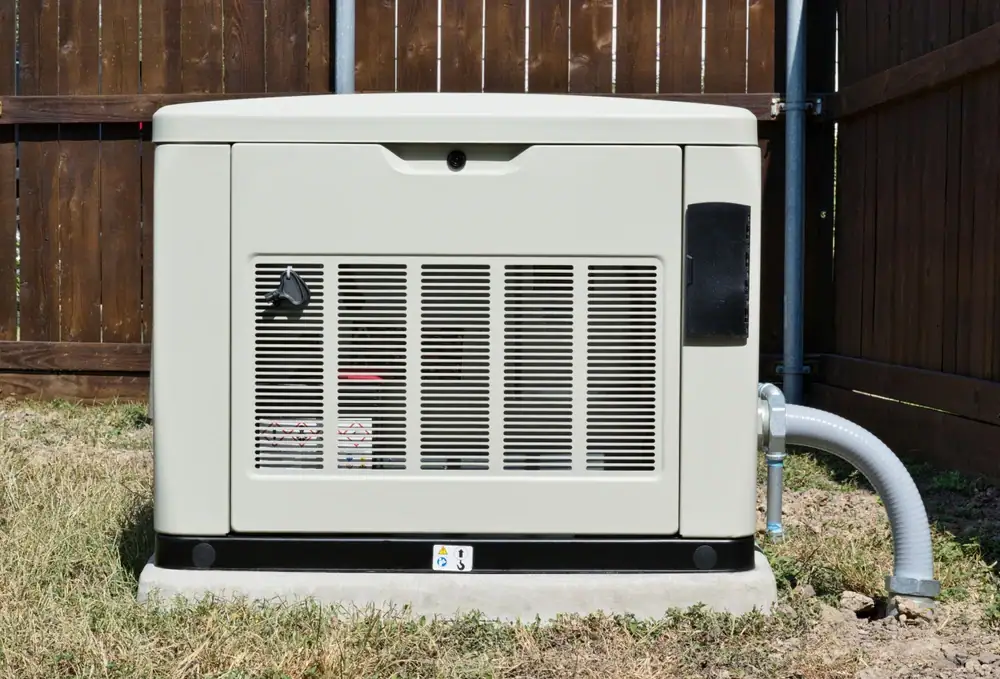
A backup generator is a permanently installed system that detects when your home loses power and automatically switches to generator power within seconds. Unlike portable units that require you to haul equipment outside during a storm, standby generators sit outside your home year-round, connected to your natural gas or propane line and wired directly into your electrical system.
When the power goes out, the generator’s automatic transfer switch senses the interruption and starts the generator. Within 10 to 30 seconds, your home has electricity again. When utility power returns, the system automatically switches back and shuts down the generator. You don’t flip a switch, pull a cord, or even wake up.
This matters because power outages rarely happen at convenient times. They happen during storms when you don’t want to be outside. They happen when you’re at work or on vacation. They happen when your basement is taking on water and your sump pump needs to run continuously. Automatic operation means your home stays protected regardless of where you are or what time the outage occurs.
The answer depends on generator size and how we configure the system. A properly sized whole house generator can power your entire home—every outlet, every appliance, every light. Smaller systems power “essential circuits” that you select based on priorities and budget.
Essential circuits typically include your furnace or air conditioning, refrigerator and freezer, sump pump, well pump if applicable, security system, some lighting, and select outlets for charging devices or powering medical equipment. Many homeowners add garage door openers, internet routers, and at least one television to stay connected during extended outages.
The sizing process involves calculating your home’s electrical load—the total wattage your selected systems draw when operating. We measure this during a site evaluation and recommend generator capacity in kilowatts. Most homes under 3,000 square feet need between 13 and 20 kilowatts for whole-home coverage. Larger homes or those with electric heating may require 22 to 48 kilowatts.
Getting the size right matters because undersized generators struggle to handle the load, potentially damaging equipment or failing to start high-draw appliances like air conditioners. Oversized generators cost more upfront and consume more fuel during operation without providing additional benefit. Professional sizing ensures you get reliable power for what you need without paying for excess capacity you won’t use.
We’ll also help you understand the difference between running wattage and starting wattage. Some appliances, particularly those with motors like refrigerators and sump pumps, require significantly more power to start than to run continuously. Generator sizing must account for these startup surges to prevent system overload when multiple appliances cycle on simultaneously.
Portable generators cost less initially—typically $500 to $2,500 for the unit—but they come with significant limitations that make them impractical as primary home protection. You store them in your garage or shed, then wheel them outside during an outage. You fill them with gasoline, start them manually, and run extension cords to appliances or connect them to a transfer switch if you’ve had one installed.
This manual process creates problems during the exact situations when you need backup power most. Severe weather makes outdoor setup dangerous. If you’re away from home when the outage occurs, your portable generator sits useless in storage while your sump pump fails and your basement floods. Gasoline storage presents fire hazards and fuel degradation issues. Portable units also produce dangerous carbon monoxide, requiring placement at least 20 feet from your home with careful attention to wind direction.
Standby generators eliminate every one of these hassles. They’re permanently installed on a concrete pad outside your home, connected to your natural gas or propane line for continuous fuel supply. They monitor your electrical service 24/7 and start automatically when power fails. They run for days or weeks without refueling because they’re connected to your existing fuel line. They shut down automatically when utility power returns.
The convenience difference becomes obvious the first time you experience an outage. With a portable generator, you’re outside in the storm, struggling with a pull cord, running cords, and hoping you have enough gasoline. With a standby generator, you might not even notice the outage occurred until you see your neighbors’ dark houses.
Cost represents the primary tradeoff. Portable generators cost a fraction of standby systems upfront but provide minimal protection if you’re not home and require manual operation during stressful situations. Standby generators cost significantly more—typically $6,000 to $15,000 installed depending on size and installation complexity—but provide true protection whether you’re present or traveling, awake or asleep.
For homeowners who travel frequently, have basements prone to flooding, rely on well water, or simply want genuine peace of mind, standby generators justify their higher cost through reliable automatic operation. For those on tight budgets who are typically home during outages and comfortable with manual setup, portable units provide basic backup capability at lower cost.
Want live answers?
Connect with a Jimco Electric expert for fast, friendly support.
Whole house generator installation in Cook County and Will County typically costs between $8,000 and $15,000 for complete turnkey installation. This includes the generator unit itself (usually $3,000 to $6,000), the automatic transfer switch ($1,200 to $2,000), installation labor ($3,000 to $5,000), concrete mounting pad, electrical connections, gas line hookup, permits, and inspections.
Several factors push costs toward the higher end of this range. Distance from your electrical panel to the generator location increases wiring costs. If your gas meter sits on the opposite side of your house from the ideal generator location, gas line routing becomes more complex and expensive. Larger generators for whole-home coverage cost more than smaller units powering essential circuits only. Liquid-cooled generators for very large homes can exceed $20,000 installed.
The installation includes more than just setting a box outside your house. We evaluate your electrical panel, install the automatic transfer switch that detects outages and switches power sources, run electrical conduit from the panel to the generator location, pour or place a concrete pad that meets manufacturer specifications for drainage and clearance, connect the generator to your natural gas or propane line, handle all permit applications for Cook County or Will County, coordinate required inspections, test the system under load, and walk you through operation and maintenance requirements.
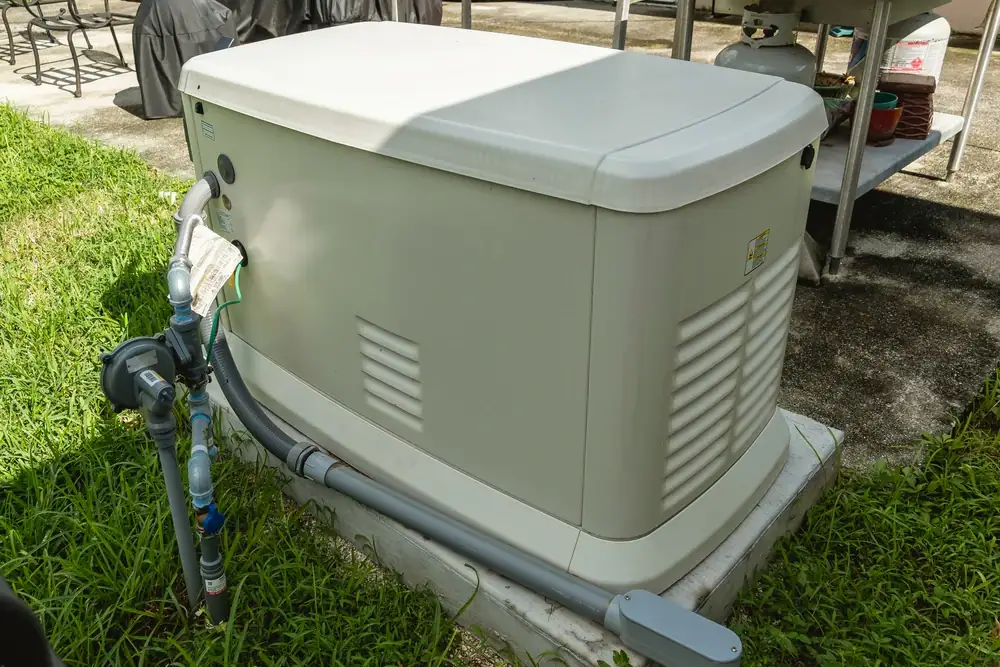
Yes. Backup generator installation requires electrical permits in Cook County and Will County, and depending on the installation specifics, you may also need building permits and gas line permits. These aren’t bureaucratic obstacles—they’re safety requirements that protect you, your family, and your property value.
Permits ensure your installation meets local electrical codes, maintains proper clearances from windows and air intakes to prevent carbon monoxide intrusion, includes appropriate grounding to prevent electrical hazards, uses transfer switches that prevent back-feeding electricity into utility lines (which can injure or kill utility workers), and complies with noise ordinances and setback requirements.
We handle the entire permit process for you. We know which permits apply to your specific installation, submit applications with proper documentation, schedule inspections at appropriate project stages, and ensure the installation passes inspection on the first attempt. This matters because unpermitted electrical work can void your homeowner’s insurance, create liability issues if problems occur, and complicate home sales when buyers’ inspectors discover unpermitted installations.
The permit process typically adds one to two weeks to project timelines while applications are reviewed and inspections scheduled. Most homeowners find this acceptable given that permits verify safe, code-compliant installation and protect property values. We build permit timing into project schedules so you know exactly when to expect installation completion.
Permit costs vary by jurisdiction but typically range from $100 to $500 depending on generator size and installation complexity. We include these costs in the installation quote so you’re not surprised by additional fees during the project.
A professionally installed whole-house generator can increase your home’s value by 3% to 5% according to Consumer Reports and real estate appraisers. On a $400,000 home, that represents $12,000 to $20,000 in added value—often exceeding the installation cost and delivering return on investment between 50% and 150%.
The value increase reflects several factors buyers consider when evaluating homes. Backup power demonstrates that the home is well-maintained and thoughtfully upgraded. It signals that the current owner invested in protection rather than just aesthetics. It provides immediate practical benefit that buyers recognize—they won’t face the disruption, damage, and expense of power outages after moving in.
Location significantly affects the value generators add. In areas experiencing frequent or extended outages, backup power becomes a major selling point that distinguishes your home from comparable properties. In Cook County and Will County, where winter storms regularly cause multi-day outages and summer storms stress the electrical grid, generators appeal to buyers who’ve experienced outage frustrations firsthand.
Certain buyer demographics particularly value backup generators. Families with young children or elderly relatives want assurance that heating and cooling will continue during outages. Remote workers can’t afford multi-day internet disruptions. Homeowners with medical equipment requiring continuous power view generators as essential rather than optional. Real estate agents can target these buyer segments specifically when marketing homes with installed generators.
The value impact diminishes as generators age, similar to how furnaces, air conditioners, and roofs depreciate over time. A new generator provides maximum value increase. A ten-year-old generator nearing the end of its typical lifespan adds less value because buyers anticipate replacement costs. Maintaining service records and performing annual maintenance helps preserve generator value by demonstrating that the system has been properly cared for and remains reliable.
Beyond direct property value increase, generators can reduce homeowner’s insurance premiums. Some insurers offer discounts for homes with backup power because generators prevent common weather-related damage claims—frozen pipes from heating system failure, flooded basements from sump pump failure, and food spoilage. Even modest annual premium reductions compound over the years a homeowner owns the property.
The right generator balances your power needs, budget, and installation site requirements. Start by identifying which systems you absolutely need during outages—heating or cooling, sump pump, refrigeration, well pump if applicable, and medical equipment top most lists. Add systems you strongly prefer like security systems, garage door openers, and internet connectivity. Finally, consider nice-to-have items like whole-home coverage for every outlet and appliance.
This prioritization exercise helps you understand whether you need whole-home coverage or whether essential circuit coverage meets your actual needs at lower cost. Many homeowners discover they can live comfortably during outages with a properly configured 13 to 16 kilowatt generator powering selected circuits rather than paying significantly more for 22 to 24 kilowatt whole-home coverage.
Fuel source depends largely on what’s available at your property. Natural gas provides the most convenient option if your home already has gas service—the generator connects to your existing line and runs indefinitely during outages without refueling. Propane works well for homes without natural gas service or in areas where gas lines aren’t available. Propane requires a storage tank (typically 250 to 500 gallons for residential generators) but provides reliable fuel supply and cleaner combustion than gasoline.
Installation location affects both cost and generator performance. Ideal placement minimizes distance from your electrical panel and gas meter, maintains required clearances from windows and air intakes, provides proper drainage so the generator pad doesn’t flood, allows adequate airflow for cooling, and complies with local setback requirements from property lines. We evaluate your property during the initial consultation and recommend the optimal location balancing these factors.
Generator brands matter for long-term reliability and parts availability. Generac dominates the residential market with about 75% market share and extensive dealer networks for service and parts. Kohler and Cummins offer premium alternatives with excellent reputations for commercial-grade construction and reliability. Briggs & Stratton provides solid mid-range options. Choosing established brands ensures you can get service and replacement parts years down the road when needed.
Professional installation by licensed electricians familiar with Cook County and Will County requirements ensures your generator operates safely and reliably when you need it. We’ve served the area for 25 years, handling everything from emergency electrical repairs to complete generator installations. Our electricians are licensed, bonded, and insured, with expertise in proper sizing, code-compliant installation, and permit coordination that protects your investment and your family’s safety.
Article details:
Share:
Continue learning: