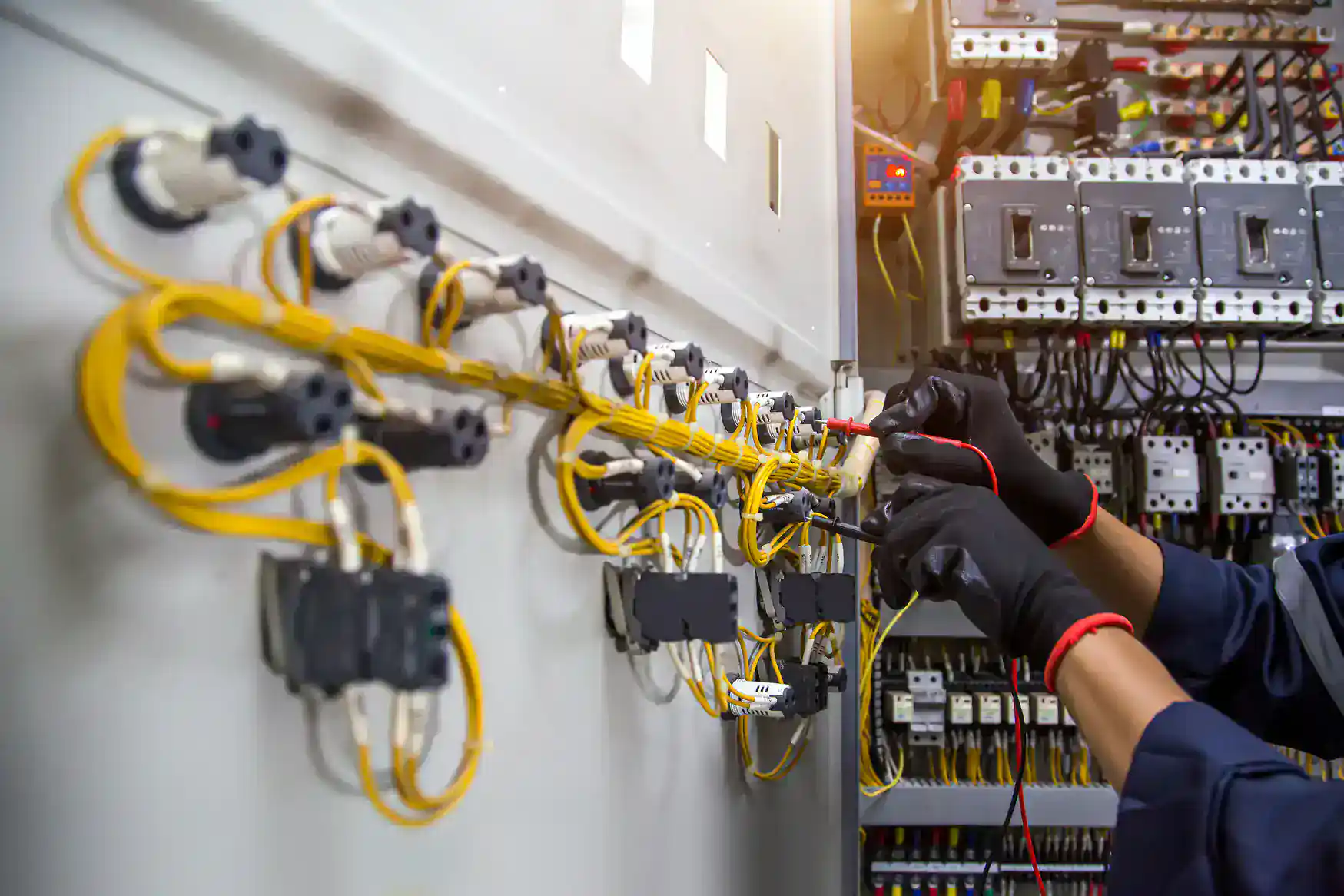
Remodeling your kitchen or bathroom? Don't let electrical oversights turn your dream home into a "current" nightmare. This checklist covers everything you need to know before the walls come down.
Share:

Summary:
Most people think about aesthetics first—the “spark” of the project, if you will. But the electrical system is the “ground” that keeps everything else from falling apart. Your electrical setup determines what’s possible in your new space.
If you wait until after demolition to figure out where the outlets go, you’re basically asking for a problem. Homes across Cook County and Will County weren’t exactly built with air fryers, smart mirrors, and heated floors in mind. Discovering your wiring is outdated after you’ve installed custom cabinetry is like trying to change your socks while running a marathon. It’s better to know “watt” you’re working with before the first sledgehammer swings.

Demo day arrives, the walls come down, and—surprise! Your contractor finds knob-and-tube wiring that looks like it belongs in a museum, not your bathroom. Suddenly, your two-week refresh is on an indefinite hiatus while everyone waits for an electrician to “stay current” with the new reality.
Every day of delay is a day you’re paying for a portable toilet or eating microwave dinners in the laundry room. The stress compounds quickly when your trades are out of sync. Your plumber is waiting on the electrician, the electrician is waiting on your decision, and you’re just waiting for a glass of wine.
This isn’t just about the calendar; it’s about the fact that kitchens and bathrooms are where electricity and water try to become “best friends”—a relationship we’d all like to avoid. Cutting corners here doesn’t just fail an inspection; it creates a genuine hazard. Bringing in a licensed pro during the planning phase is the best way to make sure your remodel flows smoothly, rather than becoming a cautionary tale for your neighbors.
Before you add a single “smart” gadget, you need to know if your home can handle the load. Most people know where their breaker panel is, but they treat it like a “mystery box.”
Older homes in our area often have 100-amp panels. Back in the day, that was plenty. Today? Between the electric car charger and the high-end range, 100 amps can max out faster than a credit card at a tile shop. If your panel is already full, you’re looking at an upgrade before you can even think about those fancy pendant lights. A licensed electrician can perform a “load calculation”—which is just a fancy way of saying we make sure your house doesn’t go on “strike” when you turn on the toaster. Don’t guess, and don’t assume your system is “fine” because it hasn’t caught fire yet. Knowing your capacity early gives you the flexibility to adjust your plans rather than being forced into a $3,000 panel upgrade at the worst possible moment.
Want live answers?
Connect with a Jimco Electric expert for fast, friendly support.
Code requirements aren’t just annoying suggestions meant to slow you down; they’re the safety net that keeps your house from becoming a “light show.” In Illinois, the rules for wet areas are strict because water and electricity have a notoriously “volatile” relationship.
The MVP here is the GFCI (Ground Fault Circuit Interrupter). It’s essentially a high-speed “panic button” for your electricity, shutting off power in 1/40th of a second if it detects a leak. If you have an outlet within six feet of water, it needs a GFCI. In most modern remodels, we just GFCI-protect the whole room, because safety is one area where you don’t want to “resist” the best option.
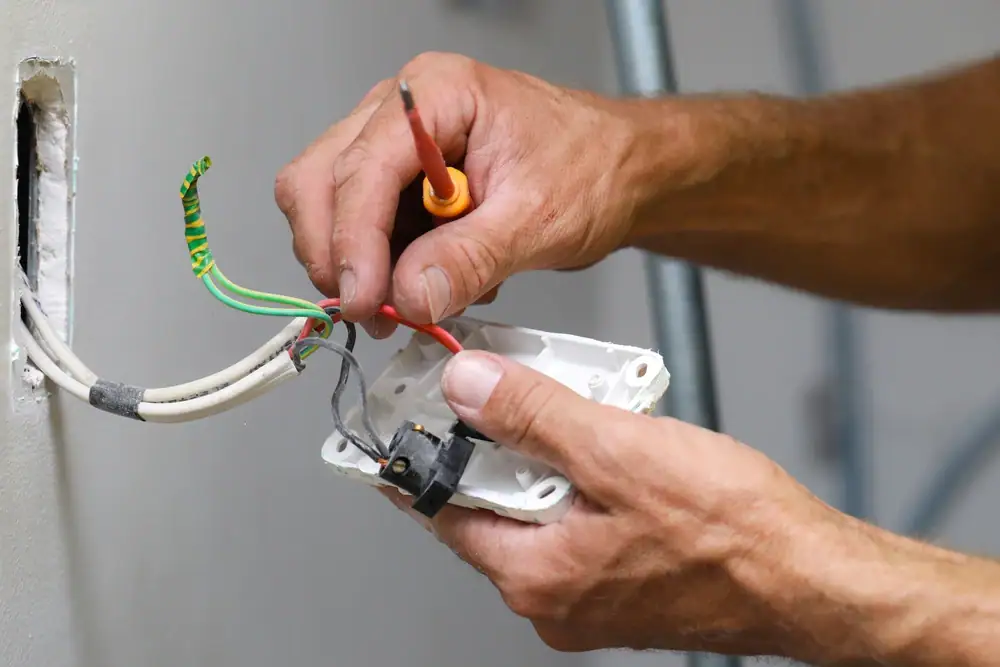
Kitchens are the most demanding rooms in the house. This is where your fridge, dishwasher, disposal, and microwave all want their own “dedicated lane” on the electrical highway.
For countertops, the rule is simple: no point along the wall should be more than two feet from an outlet. That means you need an outlet every four feet. If you find yourself reaching for a power strip to plug in your blender, you’ve officially failed the planning phase.
Major appliances need their own circuits, too. Your refrigerator shouldn’t have to share power with your toaster; otherwise, one of them is going to “trip” and leave you with warm milk. And don’t forget the island! If it’s wider than 12 inches, it needs power. Otherwise, you’re just working on a very expensive table.
Bathrooms are tiny, wet, and increasingly high-tech. You need at least one 20-amp circuit dedicated strictly to bathroom outlets. This guarantees that your hair dryer (which pulls more power than some small villages) doesn’t knock out the lights while you’re half-shaved.
We’re also seeing a massive rise in “luxury” bathroom tech. Heated floors, towel warmers, and those bidet seats that require their own outlet. If you want a heated floor that doesn’t “cook” your feet in a bad way, it needs a dedicated circuit and a properly placed thermostat.
Every switch, fixture, and outlet must be grounded. If your remodel reveals “mystery wires” from 1942, they need to be replaced. There is no “grandfather clause” for safety when it comes to standing in a puddle with a curling iron.
Your remodel should be the highlight of your year, not the reason you need a vacation. By addressing the electrical requirements before the “pretty stuff” goes in, you make sure of a project that stays on budget and works properly.
Start by having an expert look at your panel. Know your limits, follow the code, and don’t let a “handyman” friend convince you that “tape is as good as a junction box.” We’ve spent 25 years helping Cook County and Will County homeowners avoid the “dark side” of remodeling.
No matter if you’re just starting to dream or you’re ready to pull permits, we’re here to make sure your new kitchen or bath is nothing short of “electrifying”—in a good way.
Article details:
Share:
Continue learning: