
Hear from Our Customers
You flip a switch and nothing happens. Or worse—you smell burning plastic near an outlet. That’s not a “wait until Monday” situation.
When your electrical system fails, it doesn’t just inconvenience you. It puts your home at risk. According to the Electrical Safety Foundation International, there are roughly 51,000 electrical fires every year in the U.S. Most start with something small—a flickering light, a warm outlet, a breaker that keeps tripping.
We handle electrical emergencies in Alpine, IL the way they should be handled: immediately, thoroughly, and with zero guesswork. You call, we show up, and we fix it so it doesn’t happen again. No bandaid repairs. No “let’s see if this works.” Just licensed electrical work that brings your home back to safe, reliable power—whether that’s rewiring a faulty circuit, upgrading an overloaded panel, or installing a dedicated line for your new EV charger.
Your home should support the way you live now. Not the way homes were wired in 1995.
We’re Jimco Electric, and we’ve been the local electrician Alpine, IL homeowners call when something goes wrong. For over two decades, we’ve handled everything from panel upgrades to emergency repairs to EV charger installations.
We’re licensed, bonded, and insured. We show up when we say we will. And we don’t leave until the job’s done right—which means it passes inspection, meets current code, and actually solves the problem you called us for.
Alpine homes are a mix of older construction and modern electrical demands. That creates real challenges. A 100-amp panel from 2005 wasn’t designed to handle a heat pump, an induction cooktop, two EVs, and a home office. We get that. And we know how to bring your electrical system up to speed without ripping apart your whole house.
First, we listen. You tell us what’s going on—whether it’s a burning smell, a breaker that won’t stay on, or lights that flicker every time the dishwasher runs. If it’s an emergency, we’re there the same day.
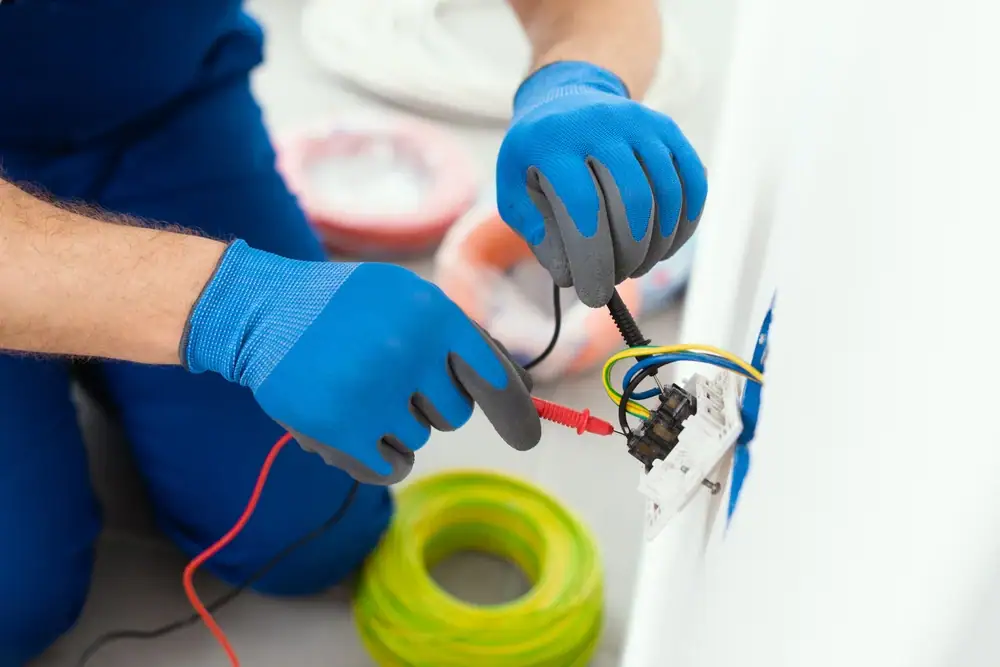
When we arrive, we start with a full electrical inspection in Alpine, IL. We don’t just fix the symptom. We find the cause. That might mean checking your panel, testing circuits, inspecting outlets, or tracing wiring. We explain what we find in plain terms—no jargon, no upselling.
Then we give you a clear price before we start any work. No surprises. No hidden fees. If you approve, we get to work. That could mean replacing a faulty breaker, upgrading your panel to handle modern loads, running a new circuit for an appliance, or installing a Level 2 EV charger with the proper amperage.
Once the work’s done, we test everything. We pull permits if needed. We make sure it passes inspection. And we clean up when we leave. You’re left with electrical wiring in Alpine, IL that works the way it should—safely, reliably, and built to last.
Ready to get started?
Every electrical repair in Alpine, IL we complete includes a full safety check, code-compliant installation, and proper permitting. You’re not just getting a quick fix. You’re getting work that’s done right.
If you’re upgrading your panel, that means installing new circuit breakers, proper grounding, surge protection, and enough capacity to handle your home’s actual electrical load. Most modern Alpine homes need at least 200-amp service to safely run HVAC systems, kitchen appliances, EV chargers, and home electronics. If your panel is still sitting at 100 amps or less, you’re likely overloading it every day without realizing it.
For EV charger installations, we handle the full scope—from running a dedicated 40 to 60-amp circuit to mounting the charger and making sure your panel can support the load. About 20% of homes need a panel upgrade before they can safely add a Level 2 charger. We’ll tell you upfront if that’s the case.
We also offer discounts for military members, first responders, seniors, teachers, students, and new customers. Not because we’re trying to win you over with a gimmick—but because we’ve been part of this community for 25 years, and we believe in taking care of the people who live here.
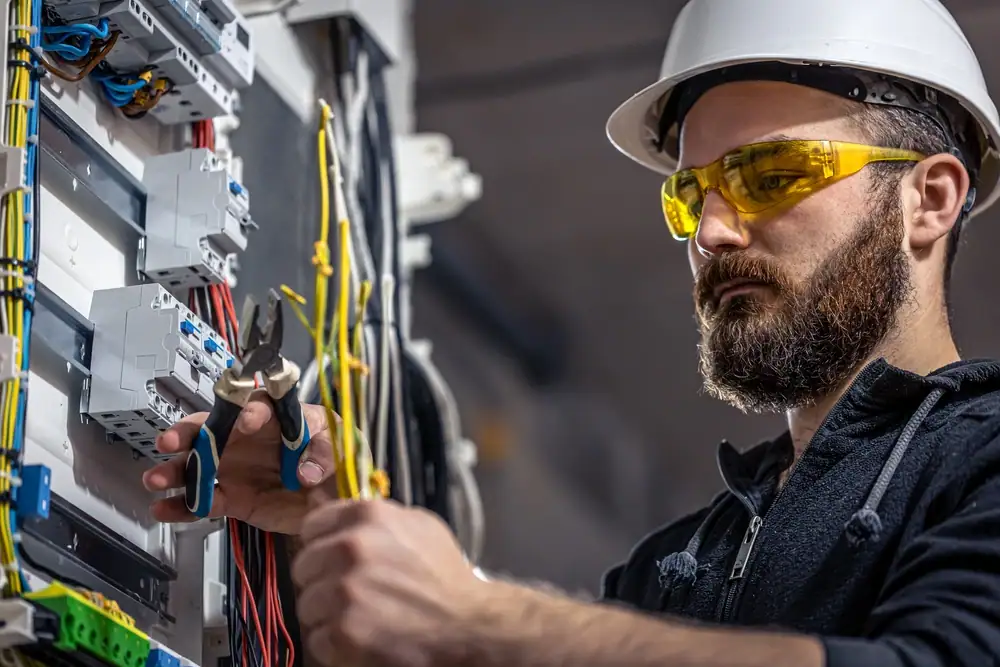
If your breakers trip frequently, your lights dim when you run appliances, or you’re adding something like an EV charger or heat pump, you probably need more capacity. Most homes built before 2010 have 100-amp or 150-amp panels, which weren’t designed for today’s electrical loads.
A licensed electrician in Alpine, IL can assess your current panel and calculate your home’s total electrical demand. If you’re close to maxing out your capacity—or already over it—an upgrade to 200 amps gives you the headroom you need. It also makes your home safer and brings your system up to current code, which matters if you ever sell.
Panel upgrades aren’t just about adding capacity. They’re about preventing overheating, reducing fire risk, and making sure your home can handle the way you actually live.
Turn off the power to that outlet at your breaker panel immediately. Don’t use the outlet. Don’t plug anything into it. And call an emergency electrician in Alpine, IL right away.
That burning smell usually means wires are overheating, insulation is melting, or there’s arcing inside the wall. All of those are serious fire hazards. Even if the smell goes away, the problem doesn’t. It’s still there, getting worse every time current runs through that circuit.
We’ve seen outlets that looked fine on the outside but were completely charred behind the wall. This isn’t something you wait on. It’s one of the most common warning signs before an electrical fire starts.
It depends on your panel’s current capacity and how much load you’re already using. A Level 2 charger typically needs a dedicated 40 to 60-amp circuit. If your home has a 200-amp panel with available slots and capacity, you’re probably fine. If you’re running a 100-amp panel that’s already supporting your HVAC, water heater, kitchen, and laundry, you’ll likely need an upgrade.
About 20% of homes need additional electrical work before adding an EV charger. That might mean a full panel upgrade, a subpanel installation, or load-sharing equipment that helps balance your home’s electrical draw.
We’ll do a full load calculation during the inspection so you know exactly what your home can handle. If an upgrade’s needed, we’ll explain why and what it involves before moving forward.
Most panel upgrades take between four and eight hours, depending on the scope of work. That includes disconnecting your old panel, installing the new one, reconnecting circuits, upgrading grounding, and testing everything to make sure it works safely.
Your power will be off during the work, so plan accordingly. We’ll coordinate with you on timing and let you know what to expect. If permits are required—which they usually are for panel upgrades—we handle that process and schedule the inspection.
Once the work’s done and inspected, your home has the capacity it needs to run modern appliances, support EV charging, and handle future electrical demands without constantly tripping breakers or risking an overload.
A breaker that trips occasionally when you overload a circuit isn’t usually an emergency. It’s doing its job—cutting power before the wiring overheats. But if the same breaker keeps tripping, won’t reset, or trips when nothing’s plugged in, that’s a sign of a bigger problem.
Real electrical emergencies include burning smells, sparking outlets, buzzing or sizzling sounds from your panel, outlets or switches that are hot to the touch, or visible scorch marks near electrical components. Those all indicate active hazards that need immediate attention from a licensed electrician.
If you’re not sure whether it’s urgent, call us. We’d rather walk you through it over the phone and confirm it’s safe than have you wait on something that turns into a fire.
Yes. If you’re dealing with an electrical emergency—loss of power, burning smells, sparking outlets, or anything that threatens your safety—we respond the same day. Electrical problems don’t wait for business hours, and neither do we.
When you call, we’ll ask a few questions to understand what’s happening and determine how urgent it is. If it’s a safety issue, we prioritize it and get someone to your home as quickly as possible. We’ve been doing emergency electrical repairs in Alpine, IL for 25 years, and we know what can’t wait.
You’ll work with a licensed, insured electrician who has the tools, parts, and experience to fix the problem on the spot—not someone who shows up, looks around, and schedules a follow-up for next week.