
Hear from Our Customers
When your lights flicker, circuits trip repeatedly, or you smell something burning near an outlet, you’re not just dealing with an inconvenience. You’re facing a potential $1.3 billion problem—that’s what electrical issues cost in property damage across the country every year. Your home should feel safe, not like a ticking clock.
Here’s what happens when the electrical problem actually gets fixed. Your breakers stop tripping every time you run the microwave and coffee maker at once. The lights stay steady when the AC kicks on. That burning smell near the panel disappears because the wiring is now up to code and properly load-balanced.
You stop worrying every time you leave the house. You’re not wondering if today’s the day something sparks in the walls. The electrical inspection passes without issues. Your family’s safe, your home’s protected, and you can focus on literally anything else.
We’ve been handling electrical repairs in Andres, IL since the late 1990s. That’s 25 years of circuit panels, service upgrades, emergency calls at 11 PM, and code compliance work that actually passes inspection the first time.
We’re licensed, bonded, and insured because that’s the baseline—not a selling point. What matters more is that we show up when we say we will, diagnose the real problem instead of the obvious one, and fix it so you’re not calling us back in three months.
Illinois doesn’t issue statewide electrical licenses. Everything happens at the local level, which means we know exactly what Andres inspectors look for and how local codes apply to your specific situation. We’re not learning on your dime.
You call or contact us with the problem. We ask a few questions to understand what’s happening—not to waste time, but because “the lights don’t work” can mean six different things, and we’d rather bring the right parts the first trip.
We schedule a time that actually works for you, or if it’s an emergency, we come now. Most electrical problems don’t wait for business hours, and we don’t either.
When we arrive, we diagnose the issue. Sometimes it’s what you thought. Sometimes it’s three steps upstream from where the symptom shows up. We walk you through what we found, what it’ll take to fix it, and what it costs before we do anything.
Then we fix it. We test the work. We clean up the area. And we make sure you understand what we did and why, so you’re not left guessing if the problem might come back.
If it’s an emergency repair, we focus on safety first and getting your power restored. If it’s an upgrade or installation, we pull permits when required and make sure everything passes inspection.
Ready to get started?
You get a licensed electrician who’s handled residential electrical systems in Andres, IL for two and a half decades. That includes emergency repairs, electrical panel upgrades, circuit additions for EV chargers, service changes, and code-compliant electrical wiring that passes inspection.
Illinois is seeing 15% growth in electrical trade demand through 2030—more than double the national average. That’s driven by infrastructure upgrades, EV charging installations, and aging homes that need serious electrical work. If your home was built before 2000, there’s a good chance your panel, wiring, or grounding doesn’t meet current safety standards.
We handle the electrical inspection process, pull permits where needed, and coordinate with local inspectors. You’re not navigating that process alone or hoping the work holds up under scrutiny.
You also get warranty coverage on the work we do, plus access to discounts if you’re military, a first responder, a senior, a teacher, a student, or a new customer. We’re not the cheapest option in Andres, IL, and that’s intentional. You’re paying for work that doesn’t need a do-over and an electrician who shows up when your panel starts smoking at 9 PM on a Saturday.
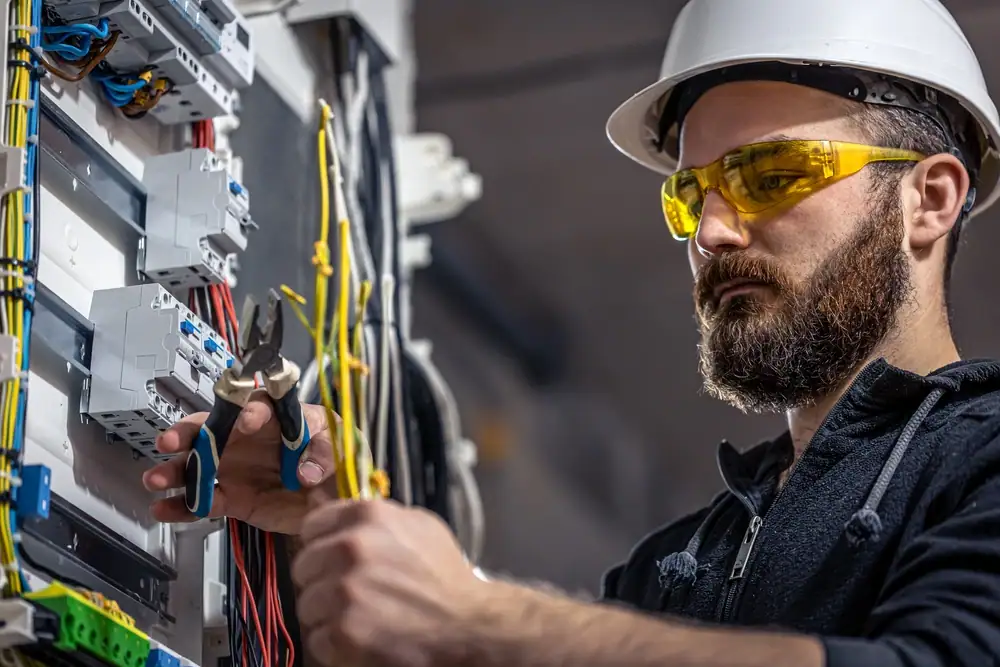
We offer 24/7 emergency electrical service because most serious electrical problems don’t happen between 9 and 5. If your panel’s sparking, you’re smelling burning plastic near an outlet, or you’ve lost power to half your house, you need someone now—not tomorrow morning.
Response time depends on where we are when you call and what else is happening that day, but emergency calls get priority. We’re talking hours, not days. When you call, we’ll give you an honest timeframe based on our current location and schedule.
What counts as an emergency? Anything that’s a fire risk, a safety hazard, or leaves you without power in extreme weather. Flickering lights can usually wait until morning. A burning smell near your breaker box cannot.
Electrical repairs in Andres, IL typically range from $150 for simple fixes like outlet replacements to several thousand for panel upgrades or whole-home rewiring. The honest answer is it depends on what’s wrong and what it takes to fix it safely and up to code.
We don’t quote blind over the phone because electrical problems are rarely as simple as they seem. A tripping breaker might be a worn breaker, an overloaded circuit, a short in the wiring, or a ground fault. Each one has a different fix and a different cost.
What we do is come out, diagnose the actual problem, and give you a clear price before we start work. No surprises, no “oh we found this other thing” upsells unless it’s genuinely a safety issue. And if you qualify for one of our discounts—military, first responder, senior, teacher, student, or new customer—we apply that up front.
You can legally do electrical work on your own home in many Illinois municipalities, but that doesn’t mean you should. Electrical work kills about 400 people a year and causes over 4,000 injuries. It’s not like plumbing where a mistake means a wet floor. A mistake here means fire, electrocution, or a code violation that tanks your home sale.
Illinois doesn’t issue statewide licenses, so electrical licensing happens at the local level in Andres. That means inspectors here have specific expectations about how work gets done, what materials are acceptable, and how things need to be grounded and bonded. If you don’t know those standards, your DIY fix might work fine until it doesn’t—or until you try to sell and the inspection flags it.
The bigger issue is diagnosis. You might see a tripping breaker and think you need a new breaker. The real problem could be a short in the wall, an overloaded circuit, or a ground fault. If you replace the breaker without fixing the actual issue, you’ve just masked a fire hazard.
Your panel probably needs an upgrade if it’s more than 25 years old, you’re tripping breakers regularly, you see rust or scorch marks on the panel, or you’re adding major appliances like an EV charger and don’t have the capacity. Most homes built before 2000 have 100-amp or 150-amp panels. Modern homes with electric vehicles, central air, and multiple high-draw appliances need 200 amps minimum.
Here’s what to look for: breakers that trip when you run normal combinations of appliances, lights that dim when the AC starts, a panel that feels warm to the touch, or visible damage like rust, burn marks, or a burnt smell. If you have a Federal Pacific or Zinsco panel, those brands are known fire hazards and should be replaced regardless of age.
An electrical inspection can tell you definitively whether your panel is undersized, outdated, or dangerous. In Andres, IL, we’re seeing more panel upgrades because of EV charger installations—those typically pull 40-50 amps, and if your panel’s already maxed out, you don’t have room to add that load safely.
Adding a circuit for an EV charger means running a new dedicated 240-volt line from your electrical panel to wherever you’re parking. Most Level 2 home chargers pull 40 to 50 amps, which is about the same as an electric dryer or range. That’s not something you tap off an existing circuit—it needs its own breaker and properly sized wiring.
First, we check if your panel has the capacity. If you’ve got a 100-amp panel that’s already running your whole house, there’s no room for a 50-amp EV charger without upgrading the panel first. If you’ve got capacity, we run the new circuit, install the appropriate breaker, mount the charger where you want it, and test everything to make sure it’s pulling the right voltage and amperage.
This work requires a permit in most Illinois municipalities, and it’ll get inspected. The inspector’s checking wire gauge, breaker size, proper grounding, and whether the installation meets National Electrical Code standards. We handle that process so you’re not figuring out permit applications and inspection scheduling on top of everything else.
Flickering lights when an appliance kicks on usually means one of three things: you’ve got an overloaded circuit, loose wiring somewhere in the system, or an undersized electrical service for your home’s current demand. All three are fixable, but they’re not something you ignore.
If the flicker is brief and only happens when a high-draw appliance like your AC or space heater starts up, it might just be a voltage drop from the initial surge. That’s not ideal, but it’s not immediately dangerous. If the flickering is constant, affects multiple rooms, or happens with smaller appliances, you’ve likely got a wiring issue or a circuit that’s pulling more load than it’s rated for.
Loose connections are the bigger concern. A loose wire creates resistance, and resistance creates heat. That’s how electrical fires start. If you’re seeing flickering plus any warmth around outlets or switches, or if you smell burning plastic, that’s an emergency. In Andres, IL, we see this a lot in older homes where the original wiring is still in place and connections have loosened over decades of expansion and contraction.