Not sure which electric panel your home needs? Here's a plain-language breakdown of 100A, 200A, and smart panels — and how to know which one fits your situation.
Share:
Summary:
If your breakers keep tripping, your lights flicker when you run the dishwasher, or an electrician mentioned something about your panel during a home inspection — you’re probably trying to figure out what you actually need. Not what sounds impressive. Not the most expensive option. Just the right answer for your home.
This guide is for homeowners in Cook County, IL who want to understand their electric panel options before making a decision. We’ll cover what separates a 100-amp panel from a 200-amp panel, when a smart panel makes sense, and what the upgrade process looks like from start to finish — including the permit side of things, which gets more complicated in Cook County than most people expect.
Your electric panel — also called a breaker box or service panel — is the hub that distributes power from the utility line to every circuit in your home. When it’s sized right and in good condition, you never think about it. When it isn’t, you feel it constantly: tripped breakers, outlets that stopped working, appliances that won’t run at the same time.
The three panel types most homeowners encounter are 100-amp, 200-amp, and smart panels. Each one represents a different era of residential electrical design, and each comes with different capacity limits, safety features, and installation requirements. Understanding the difference isn’t about becoming an electrician — it’s about knowing enough to make a smart decision when the time comes.
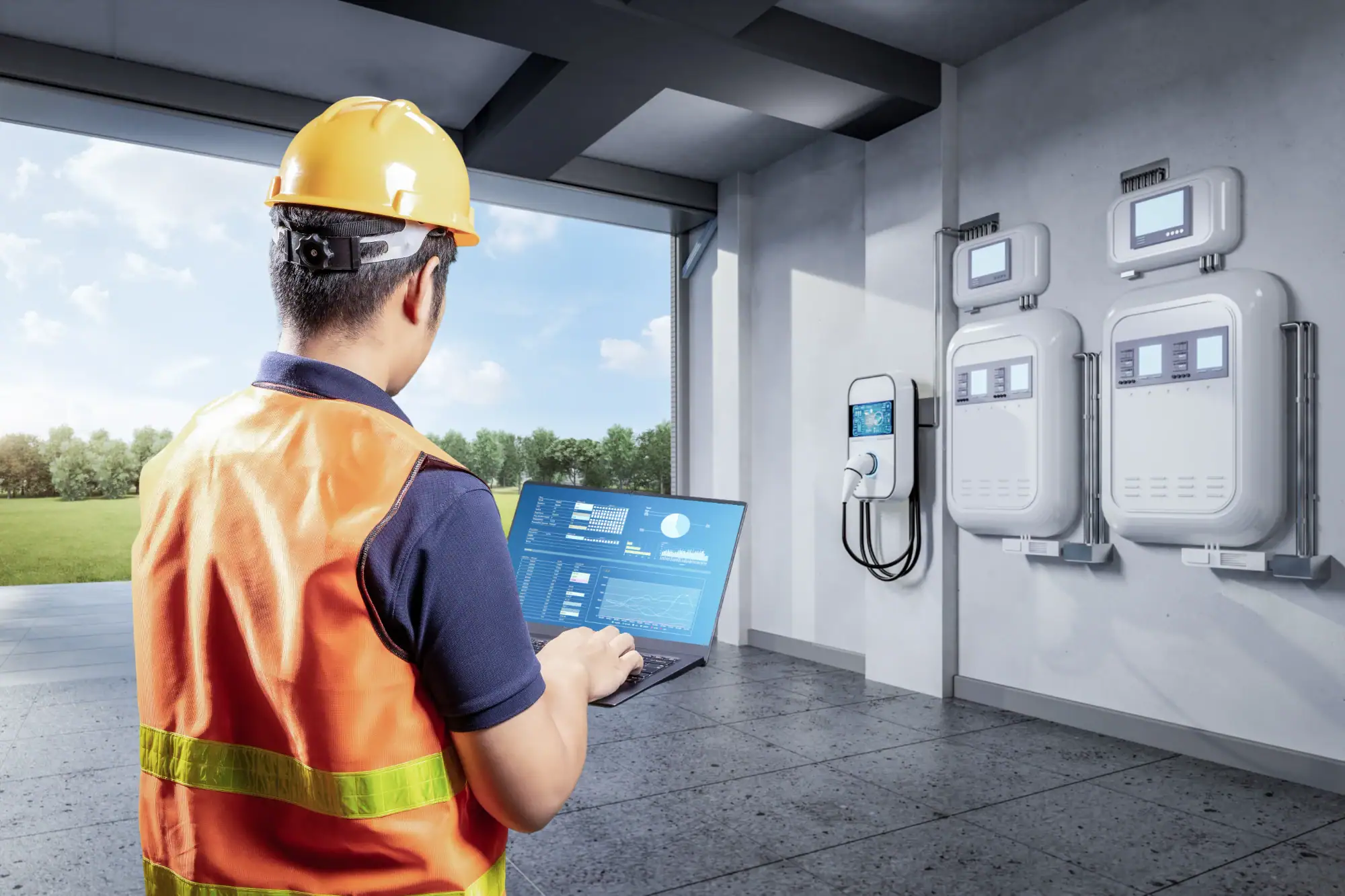
A 100-amp panel was the residential standard for decades, and plenty of Cook County homes — especially those built before 1980 in neighborhoods like Berwyn, Cicero, Beverly, and Bridgeport — are still running on one. At the time these homes were built, 100 amps was more than enough. Families weren’t charging electric vehicles, running smart appliances, or working from home on a setup that rivals a small office.
A 100-amp service typically supports 20 to 24 circuits. For a smaller home under roughly 2,000 square feet with gas appliances and no high-draw electrical loads, that may still be workable. But the moment you add central air conditioning, an electric dryer, a home office, or start thinking about an EV charger, 100 amps starts showing its limits fast.
The most common sign that a 100-amp panel is undersized isn’t a dramatic failure — it’s the slow frustration of breakers tripping when you run two things at once, or circuits that are doubled up because there’s no room to add new ones. Some homeowners have lived with this for years without realizing the panel itself is the problem.
There’s also the age factor. A 100-amp panel that’s been in place since 1965 isn’t just undersized — it may have degraded components, outdated wiring connections, or in some cases, it may be a Federal Pacific Electric (FPE) Stab-Lok or Zinsco panel. Both of those brands have documented design flaws that can prevent breakers from tripping during an overload, which is a serious fire risk. If your home was built between roughly 1950 and 1990 and you’ve never had the panel evaluated, it’s worth having a licensed electrician take a look.
The 200-amp panel is the current standard for residential electrical service, and for good reason. It supports 40 to 42 circuits, compared to the 20 to 24 a 100-amp panel can handle, and it gives your home the capacity to run modern appliances, high-demand systems, and future additions without constantly bumping against the ceiling.
If you’re adding a Level 2 EV charger, that alone requires a dedicated 240-volt circuit pulling 40 to 50 amps. On a 100-amp panel, that’s often impossible without removing something else. On a 200-amp electrical panel, it’s a straightforward addition. The same goes for heat pumps, electric ranges, and home additions — the capacity gives you room to grow without having to revisit the panel every time you upgrade something else in the house.
For Cook County specifically, the case for upgrading to 200 amps is even stronger than the national average. The housing stock here skews older — a lot of it built between the 1920s and 1960s — and the climate puts serious seasonal stress on electrical systems. Sub-zero January temperatures combined with space heaters, and 95-degree August days with central air conditioning running at full capacity, put maximum load on panels that were never designed for those demands. A panel that seems adequate in October can start failing in February.
The upgrade process from 100-amp to 200-amp service typically takes four to eight hours. It involves replacing the panel itself, updating the meter socket, and in most cases coordinating with ComEd — the local utility — to upgrade the service entrance conductors. That last step is something homeowners can’t manage on their own, and it’s something an inexperienced contractor can easily fumble. We handle the ComEd coordination as part of every service upgrade we do.
One more thing worth knowing: in Cook County, any increase in service amperage requires a permit and a municipal inspection. This isn’t optional, and it isn’t just bureaucratic paperwork. Unpermitted electrical work can void your homeowner’s insurance and create real problems if you ever sell the house. Cook County has 134 separate municipalities, each with its own building department and permit process — Chicago’s Department of Buildings operates differently than Orland Park’s, which operates differently than Skokie’s. We’ve been navigating those differences for 25 years, and we pull every permit and coordinate every inspection as part of the job.
Want live answers?
Connect with a Jimco Electric expert for fast, friendly support.
Smart panels — brands like SPAN and Lumin are the most widely known — take the standard breaker box and add a layer of digital intelligence on top of it. You can monitor your energy use in real time, control individual circuits from your phone, and set rules for how your home manages power when the grid is stressed or when you’re running on battery backup.
They’re not for everyone. Smart panels cost significantly more than a standard 200-amp upgrade, and the value proposition depends heavily on whether your home has solar, a battery storage system, or an EV — ideally more than one of those. If you have all three, a smart panel can meaningfully reduce your energy costs and give you control that a standard panel simply can’t offer.
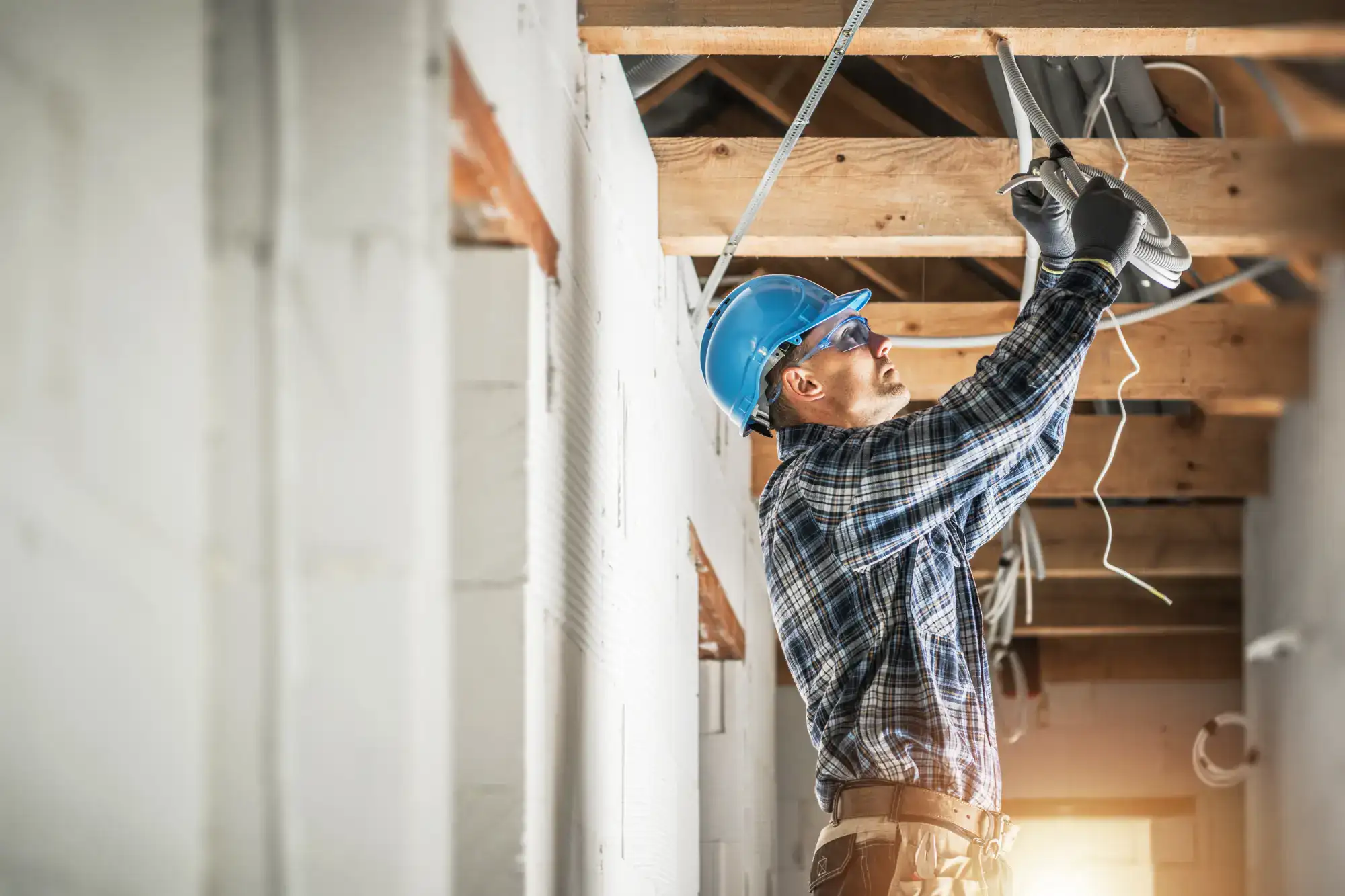
The honest answer is: it depends on what else you’re installing. A smart panel on its own, without solar or a battery system, is mostly an expensive monitoring tool. But paired with the right equipment, it becomes a genuinely useful hub for managing how your home uses and stores energy.
One thing Illinois homeowners should know is that the Inflation Reduction Act’s Section 25C tax credits can offset part of the cost. If you install a qualifying smart panel alongside a heat pump, you may be eligible for up to $600 in federal tax credits. Pair it with solar or battery storage, and that number can climb toward $1,000. These aren’t guaranteed amounts — your specific situation determines eligibility — but they’re worth factoring into the cost comparison.
The smart panel market has grown substantially over the past few years and is projected to keep growing. That’s partly because EV adoption in the Chicago metro area is among the highest in the Midwest, and managing EV charging load intelligently is one of the clearest use cases for a smart panel. If you’re charging one vehicle now and expect to add another, or if you’re planning a solar installation in the next few years, a smart panel is worth a serious conversation.
Equipment costs for smart panels range from roughly $2,100 to $4,500 before installation, depending on the brand and configuration. Total installed cost is higher than a standard 200-amp upgrade. We can walk you through whether it makes sense for your specific home and electrical setup before you commit to anything.
If your home still has a fuse box rather than a circuit breaker panel, the 100-amp vs. 200-amp conversation is almost secondary. Fuse boxes are pre-breaker technology, common in Cook County homes built before the 1960s. They work on the same basic principle — protecting circuits from overloads — but they do it with replaceable fuses instead of resettable breakers.
The practical problem isn’t just inconvenience, though that’s real enough. Fuse boxes have a hard capacity ceiling that makes them incompatible with modern electrical loads. They also create a temptation that causes genuine fires: when a fuse blows repeatedly, some homeowners replace it with a higher-rated fuse to stop the tripping. That defeats the entire purpose of the protection and allows wiring to overheat. It’s a common workaround in older homes, and it’s dangerous.
Modern circuit breaker panels solve this by making it physically harder to over-protect a circuit and by giving you a resettable breaker instead of a fuse you have to replace. But more importantly, upgrading from a fuse box to a modern panel almost always means upgrading the service capacity at the same time — moving from 60 amps to 100 or 200 amps — which brings your home’s electrical foundation into the current century.
For homeowners in older Cook County neighborhoods — we’re talking about the bungalows and two-flats in areas like Pilsen, Humboldt Park, and Harvey, or the post-war ranches in inner-ring suburbs like Calumet City and Lansing — a fuse box replacement is often the most impactful single electrical upgrade you can make. It’s not just about capacity. It’s about bringing the panel up to a standard where it can actually protect your home the way it’s supposed to.
Illinois doesn’t have a statewide electrician license, which means the person doing this work needs to hold the specific municipal license for your city or village within Cook County. That’s not a technicality — it’s how you know the work is being done by someone who understands your local code requirements and can pull the permit that makes the upgrade legal and insurable.
If your home is older, your breakers trip regularly, or you’re planning to add an EV charger or major appliance, a 200-amp panel upgrade is most likely the right move. If you’re still on a fuse box, that conversation starts even earlier. And if you have solar, battery storage, or a multi-EV household in your future, a smart panel is worth evaluating seriously.
The right answer always comes down to your home’s actual load, your plans for the next five to ten years, and what the current panel can realistically support. A proper load calculation before any work starts is what separates a well-sized upgrade from one you outgrow in three years.
We’ve been doing this work in Cook County for 25 years — handling permits across all 134 municipalities, coordinating with ComEd on service upgrades, and making sure every job passes inspection the first time. If you want a straight answer about what your home actually needs, reach out to us and we’ll start there.
Article details:
Share:
Continue learning: