Thinking about installing a home EV charger in Cook County? Here's what the process actually looks like - from panel assessment to permit to first charge.
Share:
Summary:
You just got an EV – or you’re close to pulling the trigger – and you’re realizing the cord that came in the box isn’t going to cut it. Not in Cook County, where January temperatures can drop to single digits and your battery is already working harder than the manufacturer’s range estimate suggests. A Level 2 home charger isn’t an upgrade. For most people here, it’s a necessity. This guide covers the full picture: what the installation actually involves, what it costs, what Cook County requires for permits, and how to make sure the job gets done right the first time.
Most EVs come with a Level 1 cord – a standard 120V plug that goes into any household outlet. It works, technically. You’ll get roughly 3 to 5 miles of range per hour of charging. If you drive 30 miles a day and plug in every night, you might keep up. But if you forget one night, or your commute spikes, or it’s February and your battery is already running 30% below its rated range because of the cold – Level 1 starts to feel like filling a gas tank with a garden hose.
A Level 2 charger runs on 240V and delivers 15 to 30 miles of range per hour. Most EVs fully charge overnight. That’s the practical standard for daily drivers, and it’s what we install for the vast majority of Cook County homeowners who call us.
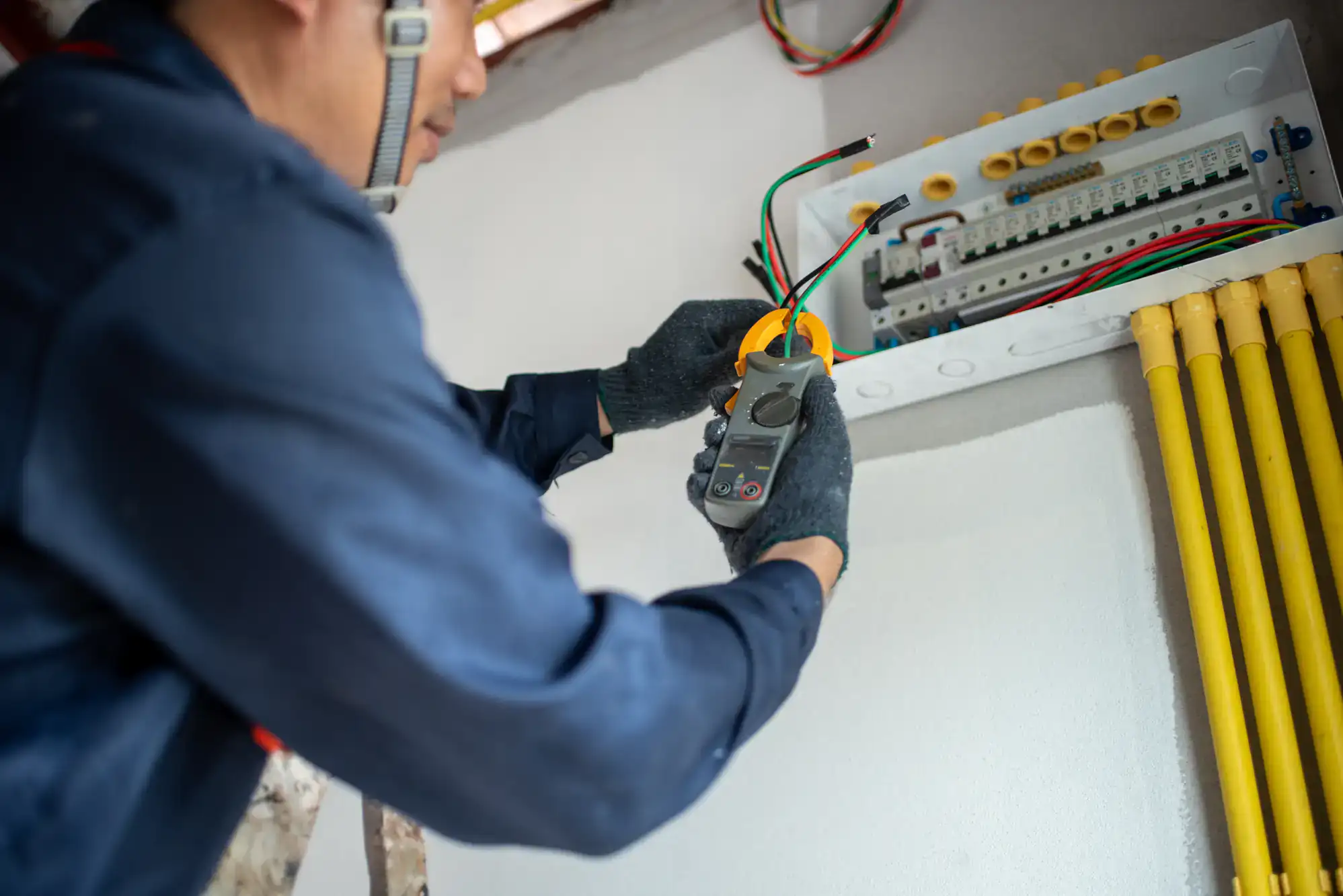
A Level 2 home charging point isn’t a plug-and-play device. It requires a dedicated 240V circuit – typically 40 to 50 amps – run from your electrical panel to wherever the charger will be mounted, usually in an attached garage. The wire gauge matters too. A 50-amp circuit calls for 6 AWG copper wire, and the conduit protecting it needs to be properly secured and routed. None of this is complicated for an experienced electrician, but it’s not a handyman job either.
Before any wire gets run, a proper installation starts with a load calculation. That means looking at your panel’s current capacity and what’s already drawing from it – your HVAC, electric dryer, oven, and anything else that pulls significant amperage. If your home is running on 100-amp service, which is common in Cook County neighborhoods built before 1970, adding a 50-amp EV circuit on top of everything else isn’t just inadvisable – it’s a code violation waiting to become a fire.
This is where older homes in communities like Berwyn, Cicero, Oak Park, and parts of Chicago’s south and northwest sides require an honest conversation upfront. A lot of these homes need a panel upgrade to 200-amp service before EV charger installation makes sense. That’s the reality of the housing stock. The good news is that a 200-amp panel also future-proofs your home for anything else you might add down the road.
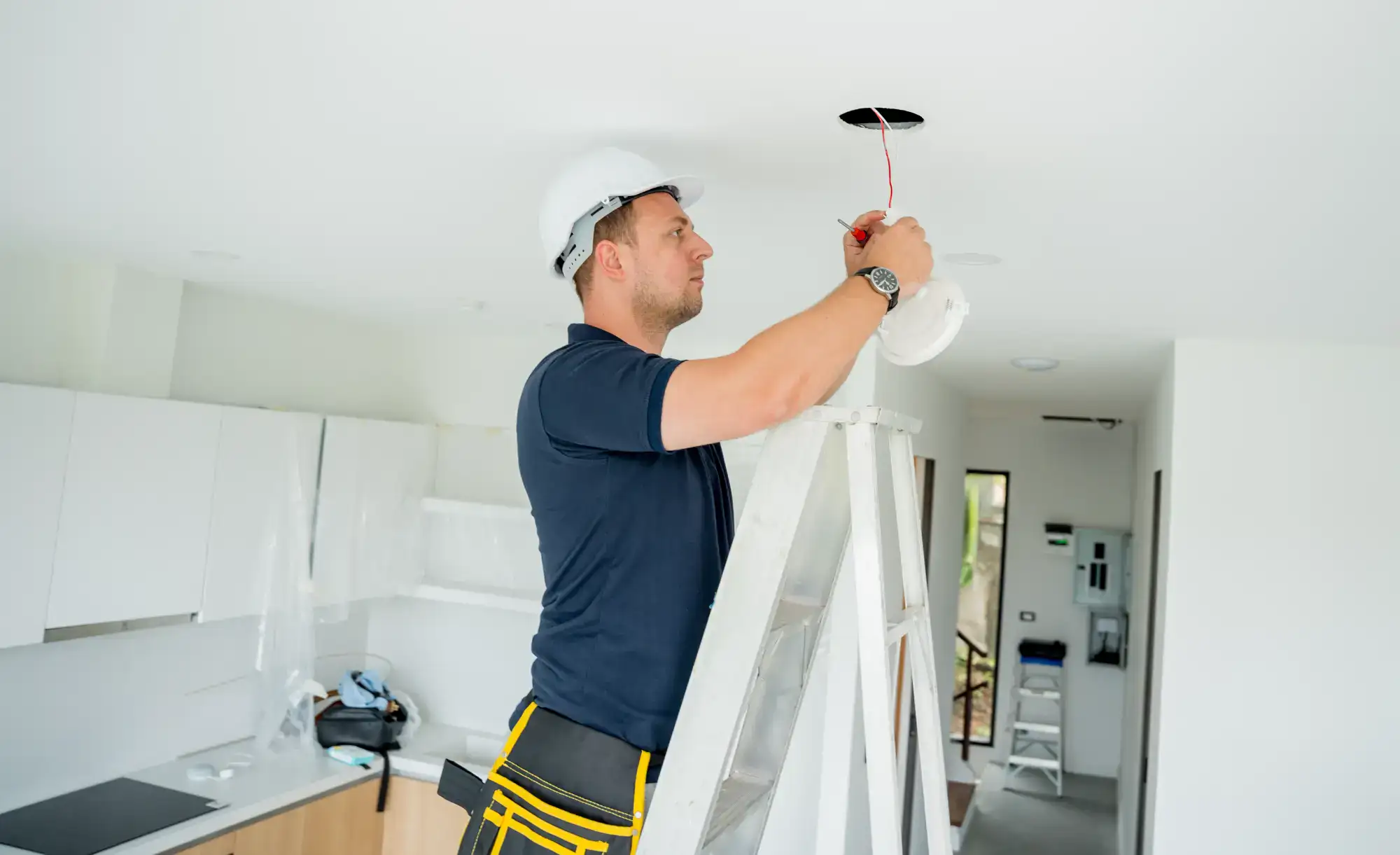
Once the panel situation is confirmed, the installation itself moves quickly. The circuit gets run, the EVSE unit gets mounted, and the system gets tested before anyone leaves your driveway. The whole process typically takes four to eight hours, depending on the complexity of the panel work and the distance between your panel and the garage.
In virtually every municipality in Cook County, a permit is required for EV charger installation. That means a licensed electrical contractor pulls the permit before work begins, and a licensed inspector signs off on the completed installation. Skip that step and you’re looking at potential insurance complications, resale headaches, and real liability if something ever goes wrong.
The permit process isn’t the same everywhere in Cook County, and that matters. The City of Chicago operates under its own modified electrical code – distinct from the National Electrical Code that most suburban municipalities follow. Evanston, Skokie, Oak Park, and Naperville each have their own inspection processes and timelines. We handle permits across all the jurisdictions we serve, and our work passes inspection the first time. That matters because a failed inspection means delays, re-inspection fees, and potentially tearing open walls to fix something that should have been done correctly from the start.
The permit timeline varies depending on where you are in Cook County. In some suburbs, you can pull a permit same-day and schedule an inspection within a week. In Chicago, the process can take longer depending on the ward and workload. We factor that into the project timeline so you’re not waiting around wondering what’s happening. The permit cost itself is typically modest – between $50 and $200 for a residential EV charger installation – but it’s a non-negotiable part of doing this right.
If a contractor tells you a permit isn’t necessary or suggests skipping it to move faster, that’s a red flag. Illinois requires licensed electrical contractors for this work, and the Illinois Department of Financial and Professional Regulation (IDFPR) licenses and oversees those contractors. Any legitimate installer should be able to hand you their license number without hesitation.
Want live answers?
Connect with a Jimco Electric expert for fast, friendly support.
Tesla owners have a slightly different set of decisions to make than drivers of other EVs, mostly around equipment. Every Tesla comes with a Mobile Connector that works on a standard 120V outlet – the Level 1 option. But Tesla also makes the Wall Connector, their proprietary Level 2 unit, which delivers up to 44 miles of range per hour depending on the model. For most Tesla owners who drive daily, the Wall Connector is the obvious home charging station choice.
The installation process for a Tesla charging station at home is the same as any Level 2 installation – dedicated 240V circuit, load assessment, permit, inspection. The Wall Connector itself mounts cleanly on a garage wall and connects to a hardwired circuit. It’s a straightforward installation for any licensed electrician who knows EV charging work.
The Wall Connector hardware itself runs between $400 and $550 through Tesla directly. That’s the unit cost before any electrical work. Installation labor in the greater Chicago area typically adds $300 to $600 depending on the complexity of the job – how far the circuit needs to run, whether conduit work is involved, and how accessible your panel is.
If your home’s panel is already at 200-amp service and has available capacity, the total cost for a Tesla Wall Connector installation in Cook County generally lands between $700 and $1,200 all in, including the unit, labor, and permit. If a panel upgrade from 100-amp to 200-amp service is required, add $1,500 to $4,000 to that figure depending on the scope of the upgrade and whether the utility service entrance needs work as well.
Here’s where it gets more interesting for Cook County residents: the federal Alternative Fuel Vehicle Refueling Property Tax Credit covers 30% of the installation cost, up to $1,000 for individuals. That’s a real offset. ComEd – the utility serving most of Cook County – has also offered rebates for qualifying Level 2 installations, typically in the $200 to $500 range depending on the current program cycle. Combining the federal credit with a ComEd rebate can meaningfully reduce your out-of-pocket cost. We walk our customers through both programs as part of the installation process because most people don’t realize the savings are available until after they’ve already paid.
ComEd also offers a Residential Electric Vehicle Rate that lets you pay lower electricity rates during off-peak overnight hours – the exact window when most people charge their EVs. Over the course of a year, that rate structure can reduce your effective “fuel” cost to the equivalent of less than a dollar per gallon of gasoline. It’s not automatic, though – you have to enroll, and your charger needs to be set up to take advantage of scheduled charging. We make sure that’s part of the conversation before we finish the job.
If you drive a Tesla, the Wall Connector is a natural fit – it’s designed specifically for Tesla vehicles, supports the highest charging speeds available for home use, and integrates cleanly with the Tesla app for scheduling and monitoring. For most Tesla owners, it’s the right call.
Non-Tesla Level 2 chargers are worth considering in certain situations. If you have multiple EVs in the household – a Tesla and a non-Tesla, for example – a dual-compatible Level 2 charger with a J1772 connector (the standard used by every non-Tesla EV) plus a Tesla adapter gives you more flexibility. Brands like ChargePoint, Emporia, and Enel X (JuiceBox) make solid residential units in the $300 to $700 range, many with WiFi connectivity, energy monitoring, and scheduling features built in.
The right choice depends on your specific vehicles, your daily mileage, and how much you want to interact with the charger’s software features. Smart chargers with WiFi connectivity let you monitor energy use, set charging schedules to align with ComEd’s off-peak rates, and get notifications if something interrupts a charge. For Cook County homeowners who want to maximize the ComEd EV rate savings, a smart charger makes that easier to manage.
You don’t need a Tesla-certified installer to put in a Wall Connector. Any licensed electrician with experience in EV charging work can do it correctly. The Wall Connector connects to a standard hardwired 240V circuit – the same type of circuit used for any Level 2 charger. What matters is that the electrician knows the load requirements, pulls the permit, and installs to code. The brand on the charger doesn’t change any of that.
Installing a home EV charger the right way means starting with an honest assessment of your electrical system, pulling the required permit, and finishing with work that passes inspection – not just work that looks finished. In Cook County, where older housing stock, harsh winters, and municipality-specific permit requirements all factor in, the details matter more than they might elsewhere.
We’ve been doing residential electrical work in this area for 25 years. We’ve upgraded panels in pre-war bungalows in Oak Park, run new circuits in Naperville new-builds, and handled the full range of what Cook County homes throw at an electrician. Every technician we send is a licensed Jimco Electric employee – no subcontractors, no surprises on the invoice, and no failed inspections.
If you’re ready to stop guessing and get a straight answer about what your home needs, reach out to Jimco Electric. We’ll tell you exactly what’s involved, what it’ll cost, and how soon we can get it done.
Article details:
Share:
Continue learning: