A breaker that won't stay reset is trying to tell you something. Here's how to read the warning signs before they become a real problem.
Share:

Summary:
You reset the breaker. Power comes back. Twenty minutes later, it trips again. It’s frustrating – and if it’s happening more than once, it’s also worth taking seriously.
A blown circuit breaker isn’t always an emergency. Sometimes it really is just too many things running on one circuit at the same time. But sometimes it’s a sign of something that won’t fix itself – and that gets worse the longer it goes unaddressed. This page will help you figure out which situation you’re actually in, what the warning signs are that separate a minor inconvenience from a real electrical hazard, and when it’s time to stop resetting and start calling.
A circuit breaker’s entire job is to stop the flow of electricity when something goes wrong. When it trips, it’s not malfunctioning – it’s doing exactly what it was designed to do. The problem is that “something went wrong” covers a wide range of situations, from a harmless overload to a developing wiring fault that belongs nowhere near a DIY fix.
The three main reasons a circuit keeps tripping are an overloaded circuit, a short circuit, and a ground fault. An overload is the most common and the least dangerous – it just means too many appliances are drawing power from the same circuit at the same time. A short circuit is more serious: it happens when a hot wire contacts another wire it shouldn’t, causing a sudden surge of current that can produce sparks and burning smells. A ground fault is similar in severity and occurs when electricity strays outside its intended path – often because of deteriorated wire insulation.
There’s also a fourth possibility that gets overlooked: the breaker itself is worn out. Breakers don’t last forever, and an aging breaker can start tripping under loads it used to handle without any issue.
If your breaker trips the moment you flip it back – before you’ve even turned on a single appliance – that’s a different situation entirely, and it needs to be treated that way.
A breaker that trips immediately on reset is almost never an overload problem. Overloads require a load to build up before the breaker responds. When there’s no load and the breaker still won’t hold, you’re almost certainly dealing with a short circuit somewhere in the wiring or a breaker that has failed internally. Either way, this is not a reset-and-hope scenario.
Short circuits can occur inside an outlet, inside a junction box, or anywhere along a circuit’s wiring path – including inside the walls. In older homes throughout Cook County, wire insulation degrades over time, and what starts as a minor fault can develop into a more serious one. The homes in communities like Berwyn, Oak Park, and Cicero – many of them built between 1920 and 1960 – often have wiring that has simply reached the end of its useful life in certain areas. That doesn’t mean the whole house needs rewiring, but it does mean the problem deserves a proper diagnosis rather than repeated resets.
The risk of continuing to reset a breaker in this situation is real. Every time you force a circuit back on that has an active fault, you’re bypassing the one safety mechanism standing between that fault and a fire. Electrical fires that start inside walls can smolder for a significant amount of time before producing visible smoke – by which point the situation has already escalated well beyond what a fire extinguisher handles.
If your breaker trips immediately and you smell anything burning – even faintly, even briefly – treat it as an emergency. That acrid, plastic-burning smell is insulation or wiring getting hot somewhere you can’t see.
Cook County has one of the oldest housing stocks in the Midwest. A substantial portion of owner-occupied homes across the county were built before 1980 – and many were built decades earlier than that. Those homes were wired for a world with far fewer electrical demands. The average American household in 1960 used somewhere between 2,000 and 3,000 kilowatt-hours of electricity per year. Today’s homes use more than three times that amount, and the gap keeps widening as homeowners add EV chargers, home offices, smart home systems, and high-draw appliances.
A 60-amp or 100-amp panel that was perfectly adequate in 1965 is often running at or near its limits in 2024. When that happens, breakers trip more frequently – not because anything is broken, but because the system is genuinely overloaded at the panel level, not just the circuit level. Swapping out individual breakers doesn’t solve that problem. It just resets the clock.
There’s also the Federal Pacific Electric issue, which is worth knowing about if you own a home built between the 1950s and 1980s in Cook County. FPE Stab-Lok panels – widely installed during that era – have a documented history of breaker failure, including breakers that fail to trip even at twice their rated load. If your panel has that name on it, or if you’re not sure what brand it is, that’s a conversation worth having with a licensed electrician before the next time something trips.
The broader point is this: a blown circuit breaker in a newer home with a properly sized panel is usually a straightforward fix. The same symptom in a 70-year-old home in Evanston or a postwar ranch in Tinley Park may be pointing to something that runs deeper than a single breaker swap.
Want live answers?
Connect with a Jimco Electric expert for fast, friendly support.
A dryer that keeps tripping its breaker is one of the most common calls we get – and one of the most misunderstood. Homeowners aren’t sure whether to call an appliance repair company or an electrician. Sometimes they get bounced between both and end up no closer to an answer.
Here’s the short version: dryers run on dedicated 240-volt, 30-amp circuits – the highest residential load of any standard household appliance. Because of that high current draw, any fault anywhere in the system triggers the breaker quickly. The problem could be the dryer itself, the circuit, or the breaker. Figuring out which one requires more than a reset.
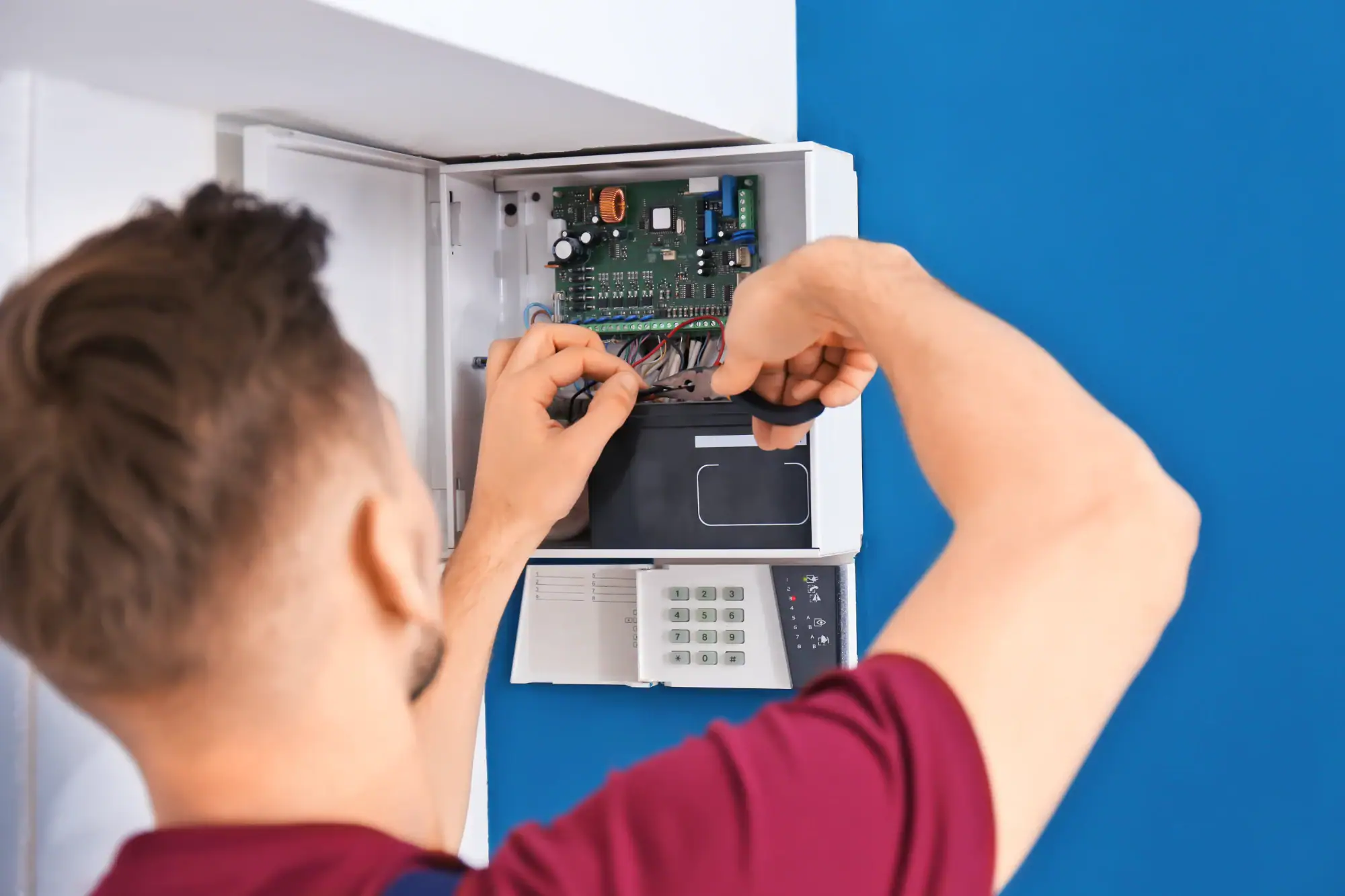
The most practical way to start narrowing this down is to pay attention to when the breaker trips. If it trips partway through a drying cycle – especially during the heating phase – the dryer’s heating element or motor may be drawing more current than it should, which points to an appliance problem. If it trips immediately when the dryer starts, or even before it starts, that’s more likely to be a circuit or breaker issue.
A dryer breaker that trips and then holds fine after a reset, only to trip again an hour later, is a pattern worth documenting. How long into the cycle does it trip? Does it happen every time, or only when the dryer runs back-to-back loads? Does the breaker feel warm to the touch after it trips? These details matter when a technician is trying to isolate the cause.
One thing that’s worth understanding: dryer breakers are double-pole breakers that control both legs of the 240-volt circuit. When one of those poles starts to fail internally, the breaker may trip inconsistently – sometimes holding fine, sometimes not. That kind of intermittent failure is easy to mistake for a dryer problem, and it’s exactly the kind of thing that gets missed when someone just resets the breaker and moves on.
In Cook County, where many homes have panels that are 30 to 50 years old, a dryer breaker that’s starting to fail isn’t unusual. The breaker has been doing its job for decades, and like any mechanical component, it eventually wears out. Replacing a worn breaker is a straightforward job for a licensed electrician – but it does require working inside the panel, where even with the main breaker off, the service entrance wires remain live. That’s not a place for guesswork.
Sometimes a dryer tripping its breaker is the first visible sign of a panel that’s running out of capacity. If you’ve recently added other high-draw appliances – a second refrigerator, a chest freezer, a home EV charger – and your dryer started tripping around the same time, that’s not a coincidence worth ignoring.
Cook County suburbs have seen a significant uptick in Level 2 EV charger installations over the past few years, particularly in communities like Naperville, Hinsdale, and Wilmette. A Level 2 charger typically requires a dedicated 240-volt, 50-amp circuit. If your panel is already running near capacity and you add that load, other circuits – including your dryer circuit – can start behaving erratically even if nothing is technically broken.
The fix in that situation isn’t a new breaker. It’s a panel capacity evaluation, and potentially a panel upgrade or service change to bring your home’s electrical capacity in line with what you’re actually using. This is exactly the kind of assessment that gets skipped when someone just swaps a breaker and calls it done.
It’s also worth knowing that in Cook County, most panel and circuit work requires a permit and must pass inspection. This isn’t just bureaucratic red tape – it’s a meaningful protection for you as a homeowner. Unpermitted electrical work can create real complications when you sell your home, and it can also mean that a problem was “fixed” in a way that doesn’t actually meet current code. Work that passes inspection the first time, performed by a contractor who is registered with Cook County and carries a current supervising electrician’s license, is work you can stand behind. Not every electrician operating in the county meets those requirements – and it’s worth asking before anyone opens your panel.
A blown breaker that happens once and never repeats is usually nothing to worry about. A blown breaker that keeps coming back is a pattern — and patterns in electrical systems don’t resolve themselves. The underlying cause is still there whether the breaker is tripped or reset.
The safe move is to stop treating the symptom and start finding the cause. If the breaker trips immediately on reset, smells like burning, or controls something you can’t afford to lose power to, don’t wait. If it’s a recurring issue that’s been building for weeks, a professional diagnosis is still the right call — you just have a little more time to make it.
We’ve been doing this work in Cook County and the surrounding area for 25 years. We know the homes here, the panels that were installed in them, and the problems that come with that combination. If you’re dealing with a breaker that won’t stay on, reach out to our emergency electrician team — we’ll tell you exactly what’s going on and what it’ll take to fix it, before any work starts.
Breakers that keep tripping are one of the common electrical problems that point to an aging panel.
Article details:
Share:
Continue learning: