Getting a car charger installed at home is simpler than most people think — if you hire the right electrician. Here's what Cook County homeowners need to know.
Share:
Summary:
You just got a new electric vehicle. You plugged it in the first night using the cord that came in the box — and woke up to 40 miles of range added after eight hours of charging. That’s the moment most Cook County EV owners realize the standard outlet isn’t going to cut it.
A Level 2 home car charger installation solves that immediately. But it’s not a plug-and-play job. It involves a dedicated 240-volt circuit, a permit, a licensed electrician, and — depending on your home — possibly a panel assessment. Here’s everything you need to know before you make a single call.
Most homeowners picture something complicated when they hear “electrical installation.” In reality, a standard Level 2 car charger installation takes two to four hours from start to finish, and the average home in Cook County is already set up to handle it without any major changes.
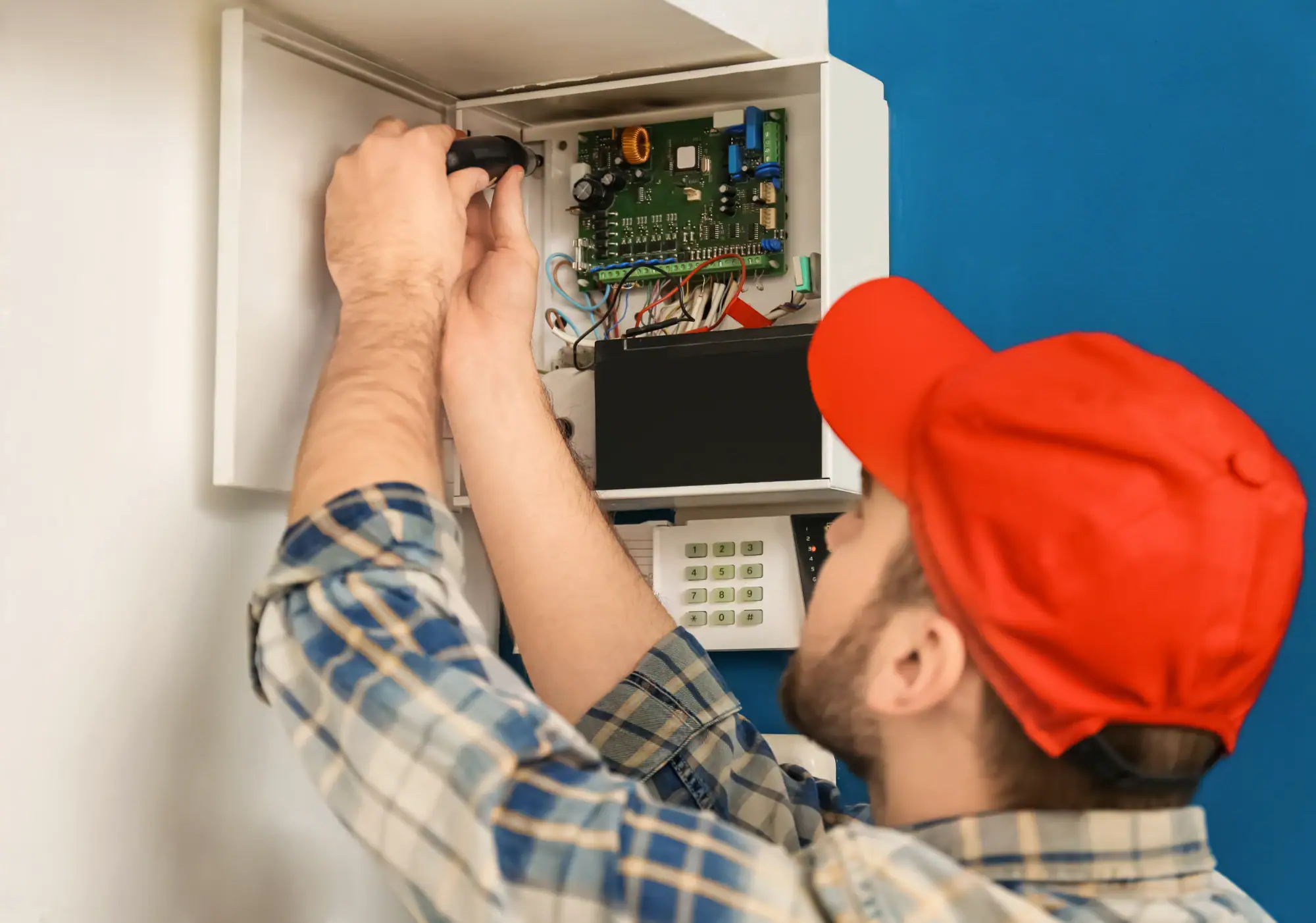
The process starts with an assessment of your electrical panel and garage setup. We check whether your panel has the capacity to support a new 240-volt dedicated circuit — the same type of circuit that powers a dryer or range. If it does, the circuit gets run to your garage, the charger gets mounted and connected, and the job is done. If your panel is running close to capacity, that conversation happens before any work begins, so you know the full scope and cost upfront.

This is the question that causes the most anxiety — and the honest answer is: probably not. Only about 20 to 30 percent of homes actually require a panel upgrade before a car charger installation can happen. The majority of Cook County homes already have enough capacity to support a new 240-volt circuit without any changes to the existing panel.
That said, Cook County’s housing stock is genuinely diverse in ways that matter here. The inner-ring suburbs — Oak Park, Morton Grove, Berwyn, Western Springs — have a lot of homes built in the early-to-mid 20th century. Some of those homes still have 60-amp or 100-amp panels that were sized for a different era of electrical demand. If you’re in one of those neighborhoods, an honest assessment is worth doing before assuming everything is fine.
On the other hand, homes in newer developments in Schaumburg, Matteson, or parts of Naperville typically have 200-amp panels with room to spare. Same-day installation with no surprises is common in those situations.
The point is: don’t assume the worst before someone actually looks. A proper assessment takes a few minutes and gives you a definitive answer. If a panel upgrade is needed, you’ll know the cost before any work begins. If it isn’t, you’re probably looking at a straightforward installation that wraps up the same day.
One thing worth noting — if your home does need a panel upgrade, it doesn’t mean two separate service calls. We handle both panel work and EV charger installation, so we can take care of everything in one visit, which saves time and coordination on your end.
Yes — and this is one of those areas where skipping the step creates real problems later. Both the City of Chicago and Cook County municipalities require permits for EV charger installations. The specific process varies depending on which suburb you’re in, but the requirement itself is consistent across the county.
Why does it matter? A few reasons that go beyond just following the rules. First, if an unpermitted installation causes damage — a fire, an electrical fault — your homeowner’s insurance can deny the claim. Second, when you sell your home, unpermitted work has to be disclosed. That can complicate a sale or reduce your negotiating position at exactly the wrong moment. Third, the inspection that comes with a permit is the confirmation that the work was done correctly. It’s a layer of protection for you, not just a bureaucratic checkbox.
In Illinois, only licensed electrical contractors can pull permits for this type of work. So if someone offers to install your EV charger and skip the permit to save time or money, that’s a signal worth paying attention to.
The permit process across Cook County’s 130-plus municipalities can look different from one town to the next. Arlington Heights has its own process. So does Evanston, Naperville, and every other suburb. Knowing those local requirements — and having handled them before — is part of what makes an experienced local electrician worth hiring. When we handle a car charger installation in Cook County, we pull the permit, schedule the inspection, and make sure the work passes the first time. You don’t have to navigate any of that.
Want live answers?
Connect with a Jimco Electric expert for fast, friendly support.
There’s a version of this conversation where someone says “it’s just wiring” and points to a YouTube tutorial. And there’s a version where an insurance adjuster is standing in a burned garage explaining why the claim is being denied because the installation wasn’t permitted.
The gap between those two scenarios is real. EV charger installation involves high-amperage electrical work on a continuous load circuit — meaning the circuit runs at or near full capacity for hours at a time. That’s different from most household circuits, and the NEC has specific requirements around how those circuits are sized and protected. Getting that wrong doesn’t just mean a failed inspection. It can mean a fire hazard that develops slowly over months before anything visible goes wrong.
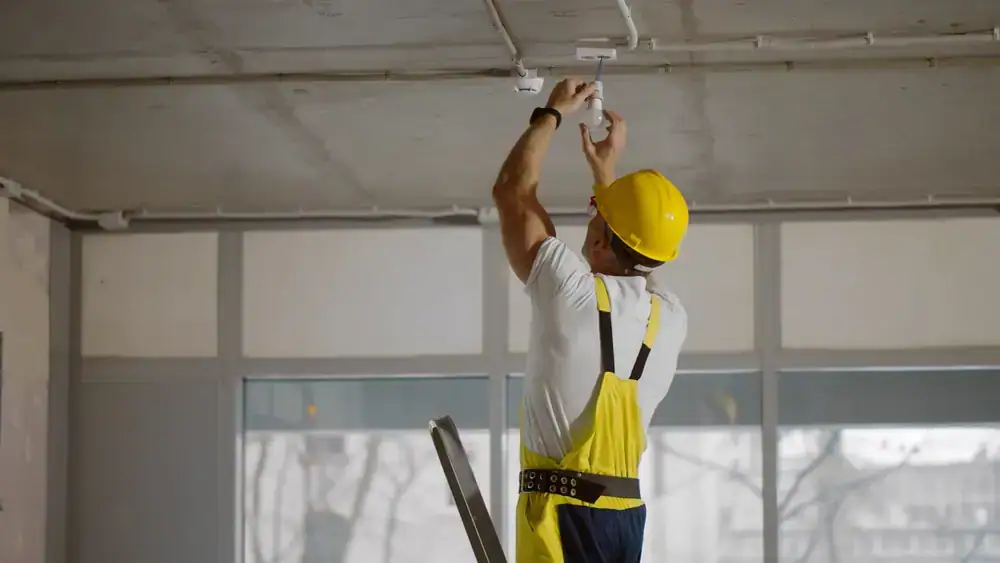
Illinois takes EV charger installation seriously at the regulatory level. Vendors and contractors who install EV charging stations must comply with Illinois Commerce Commission certification requirements — that’s not optional language, it’s statute. The ICC maintains a list of certified installers, and the requirements include compliance with NEC standards, manufacturer installation instructions, and UL-listed equipment standards.
Illinois doesn’t issue a single statewide electrician license the way some states do. Licensing is handled at the local level, which means every city and county has its own requirements, exams, and bonding rules. Chicago’s Department of Buildings has its own registration process for electrical contractors. Cook County suburbs each have their own versions of that.
What this means practically: the electrician who shows up to install your charger needs to be licensed in your specific municipality — not just “licensed somewhere.” This is one reason why working with someone who has 25 years of experience in Cook County neighborhoods matters. We’re not figuring out the local requirements on your job. We already know them.
It also means that a handyman, a general contractor who dabbles in electrical work, or an out-of-area company that expanded into your market recently may not meet the requirements to legally pull a permit in your suburb. That’s worth confirming before anyone starts work.
Cost is the question most people are working around when they start researching this — so here’s a straightforward answer. For most Cook County homeowners, a Level 2 car charger installation runs between $1,800 and $3,000 total, including equipment and labor. Labor alone typically falls between $400 and $600, though it can vary based on how far the circuit needs to run and the specifics of your garage setup.
If a panel upgrade is needed, that adds roughly $1,000 to $3,000 to the project. But again — most homes don’t need one, and you’ll know before work begins.
What significantly changes the math is the rebate landscape in Cook County. ComEd customers are eligible for rebates ranging from $1,000 to $3,750 for Level 2 charger installations, depending on income eligibility and program availability. That program runs on a first-come, first-served basis and the funds run out each year — so timing matters. On top of that, the federal 30C tax credit covers 30 percent of installation costs up to $1,000. If you’re in Naperville, the city also offers a rebate of up to $500 for qualifying installations.
Stack those incentives together and the out-of-pocket cost looks very different from the sticker price. A homeowner who qualifies for the full ComEd rebate and claims the federal tax credit could offset a substantial portion of the total project cost.
One thing that often gets overlooked in cost conversations: Cook County winters. At temperatures near 0°F — which happens regularly in this part of Illinois — EV batteries can lose 30 to 40 percent of their rated range, and Level 1 charging becomes functionally inadequate for daily driving. A Level 2 charger isn’t a convenience upgrade in this climate. For most EV owners here, it’s a practical necessity by November. That context matters when you’re weighing the cost.
The short version: a home car charger installation is a straightforward job when it’s handled by someone who knows what they’re doing. The permit gets pulled, the circuit gets run correctly, the inspection passes, and you wake up every morning to a fully charged vehicle. That’s the whole goal.
Where things go sideways is when homeowners hire someone who cuts corners on permitting, skips the panel assessment, or isn’t actually licensed to do the work in their municipality. The problems that creates — voided insurance, failed inspections, safety hazards — aren’t worth the savings.
If you’re in Cook County and ready to move forward, we’ve been handling exactly this kind of work across the Chicago suburbs for 25 years. Every electrician is licensed, bonded, and insured. Pricing is clear before work starts. And we handle the permit and inspection so you don’t have to. Reach out to us directly to get a straightforward answer about what your home needs and what it will cost.
Article details:
Share:
Continue learning: