Power outages in Cook County aren't rare — they're inevitable. Here's what you need to know before choosing a whole home generator.
Share:
Summary:
If you’ve ever sat in a dark house in January waiting for ComEd to restore power — furnace off, phones draining, food slowly warming in the fridge — you already know why people install whole home generators. The question isn’t really whether backup power makes sense. It’s which system is right for your home, what it’s going to cost, and who should install it.
This guide is written for Cook County homeowners who are serious about getting this right. We’ll walk you through how these systems work, what the installation actually involves, and what to watch out for before you sign anything.
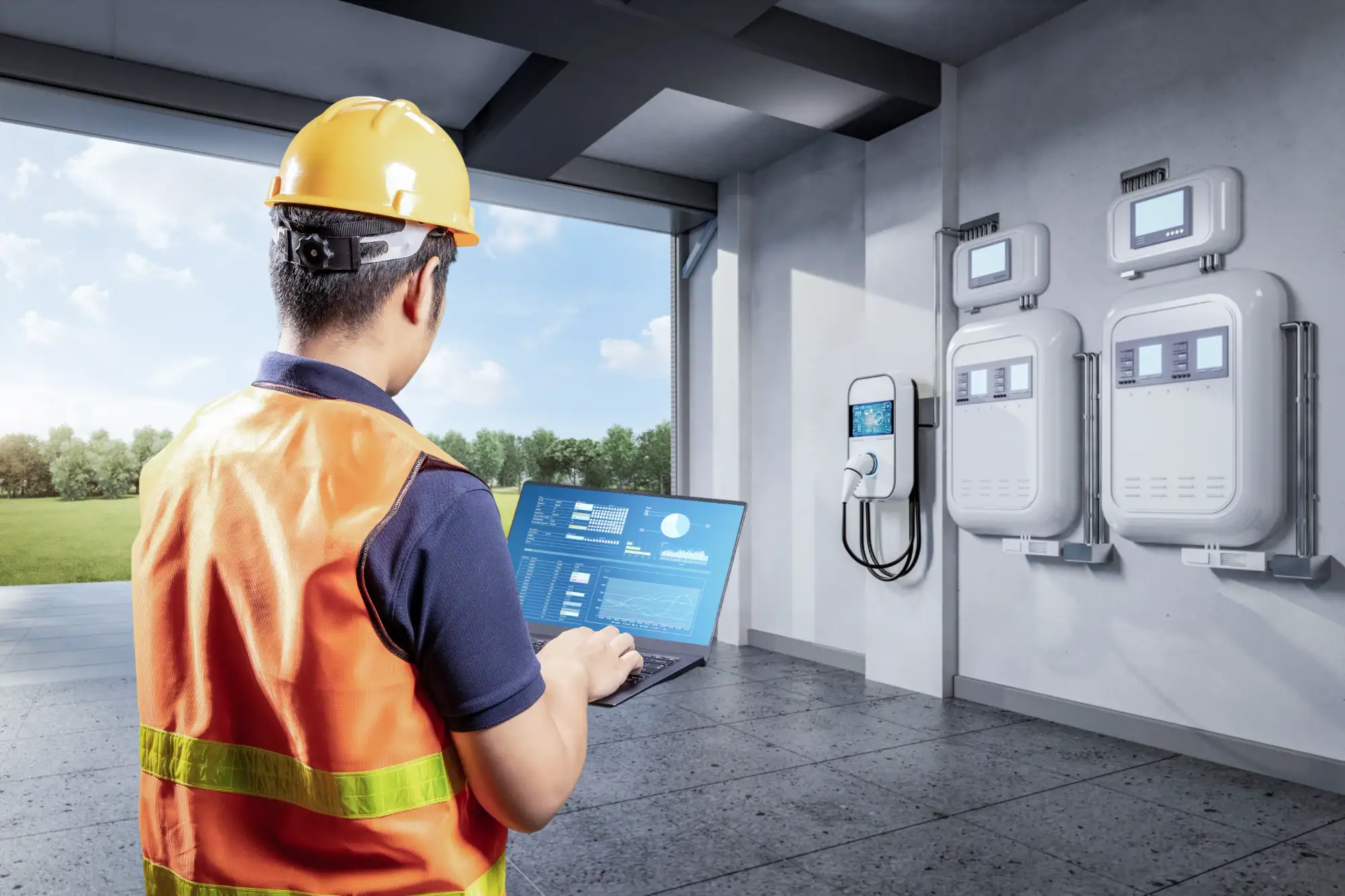
A whole home generator is a permanently installed backup power system that kicks on automatically when your utility power goes out. Unlike a portable generator you drag out of the garage and fuel up manually, a standby generator sits outside your home on a concrete pad, connects to your existing fuel supply, and monitors your power around the clock.
The moment ComEd drops — whether it’s 2 PM during a summer derecho or 3 AM during a January ice storm — the generator detects the outage and starts within seconds. Your lights stay on. Your furnace keeps running. Your sump pump doesn’t quit right when your basement needs it most.
The system that makes this automatic is called an Automatic Transfer Switch, or ATS. It’s the critical link between your generator and your home’s electrical panel. When power goes out, the ATS disconnects your home from the grid and connects it to the generator instead. When utility power returns, it switches back. You don’t touch anything.
This is one of the first questions homeowners ask, and it’s worth answering honestly. Portable generators are cheaper upfront — typically a few hundred to a couple thousand dollars for the unit itself. But the comparison gets complicated fast once you factor in what they can and can’t do.
A portable generator runs on gasoline, which degrades in storage after a few months. It has to be set up manually every time there’s an outage. It can’t power your central air conditioning or your furnace blower. You run extension cords through cracked windows or doors, which creates both a security and a carbon monoxide risk if the unit isn’t positioned properly outside. And when the storm hits at midnight, you’re the one going out to start it.
A whole home standby generator handles all of that automatically. It’s connected to your natural gas line — which is how most Cook County homes are set up — so there’s no fuel to store and no refueling required. It can power your entire home, including HVAC, sump pump, refrigerator, and lights, not just a few circuits.
The other thing worth knowing: natural gas infrastructure almost never goes down during a power outage. ComEd’s electrical grid and Peoples Gas’s distribution system operate independently. So even during a multi-day outage — which does happen in Cook County after major storm events — your generator keeps running without interruption.
For homeowners who already own a portable unit and are frustrated with it, the upgrade to a standby system usually makes sense faster than they expect. The math changes when you factor in the value it adds to your home (3–5% increase in resale value), potential insurance premium discounts from your carrier, and the very real cost of one flooded basement or a burst pipe from a cold house.
This is where a lot of homeowners get tripped up, and where less experienced installers cut corners. Generator sizing isn’t a guess — it’s a calculation based on your home’s actual electrical load.
The general ranges are useful as a starting point. Homes under 1,500 square feet can usually get by with a 7–10 kW unit if the goal is covering essential circuits only. Homes in the 1,500–3,000 square foot range — which describes a large portion of Cook County’s suburban housing stock in communities like Arlington Heights, Oak Park, and Schaumburg — typically need 17–20 kW for full coverage. If you want to run central air conditioning, all major appliances, and every circuit without compromise, you’re looking at 22–25 kW or more.
But here’s what those ranges don’t tell you: whether your existing electrical panel can support the installation at all.
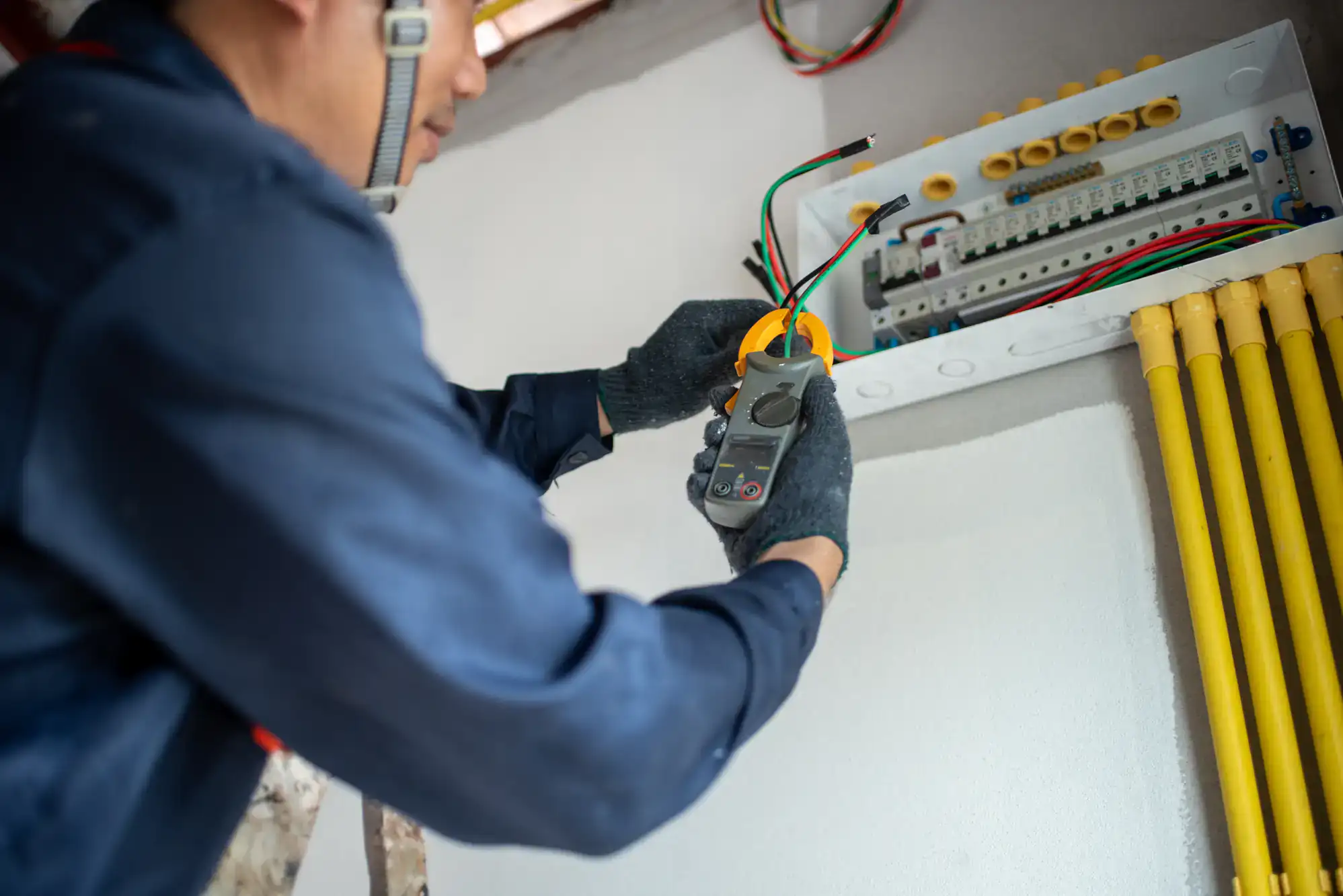
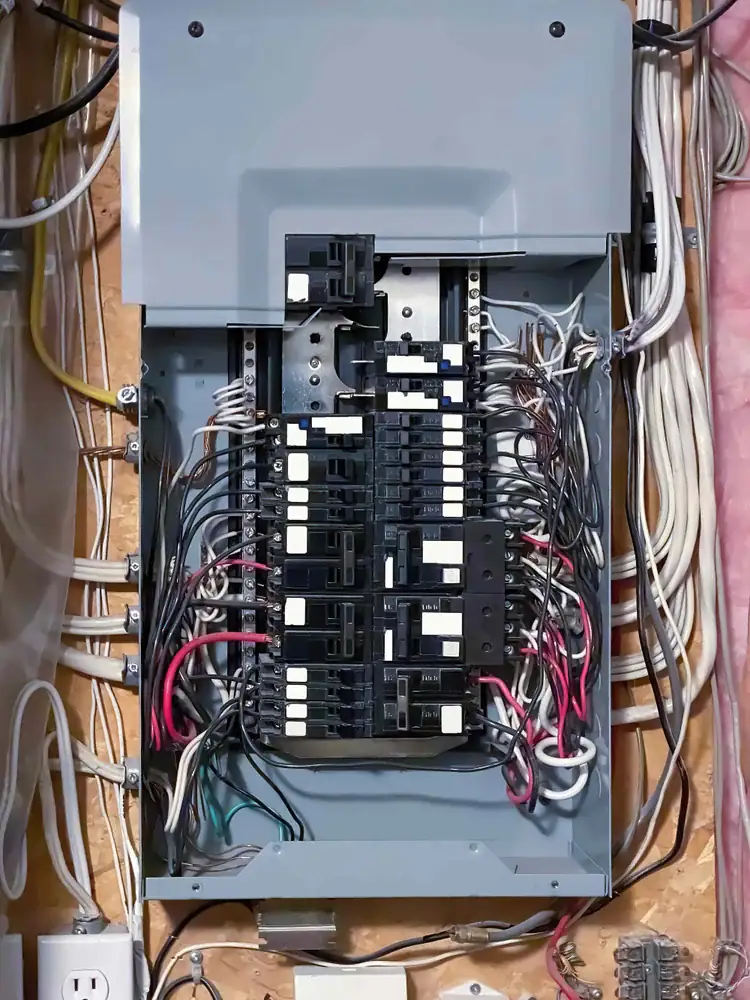
A significant number of Cook County homes were built in the 1950s through the 1970s, and many of them still have the original 100-amp service panel. That’s not enough capacity to safely add a transfer switch and generator load without an upgrade. This isn’t a dealbreaker — a panel upgrade from 100-amp to 200-amp service is a straightforward job for a licensed electrician, and it improves your whole home’s electrical capacity, not just the generator connection. But it does need to be assessed before anything else happens.
Any installer who gives you a generator recommendation without first looking at your panel is skipping a step that matters. The panel assessment is part of the process, not an upsell. We’ve been working in Cook County homes since 1999, and we see older panels regularly — it’s one of the first things we check.
Fuel type is the other sizing consideration. For most Cook County homeowners, natural gas is the obvious answer. You already have a gas line. There’s no propane tank to install or refill. The generator connects to your existing Peoples Gas or North Shore Gas service and runs as long as the outage lasts. For homes without gas service, liquid propane is the next best option — stored in an onsite tank, it can power your home for days to weeks depending on load and tank size.
Want live answers?
Connect with a Jimco Electric expert for fast, friendly support.
Installing a whole home generator isn’t a weekend project. It involves electrical work, gas connections, a concrete pad, permits, and inspections — and in Cook County, the permitting side has specific requirements that catch some contractors off guard.
The Cook County Department of Building and Zoning requires that generator installations be performed by a registered electrical contractor. That means a letter of intent signed by the supervising electrician, a site plan showing where the generator will sit relative to your home and property lines, and a single-line electrical diagram showing your meter, main panel, transfer switch, and generator. Gas permits are required separately when a new gas connection is involved.
This isn’t bureaucratic red tape — it’s the process that ensures the work is done safely and that your home’s insurance coverage isn’t compromised by unpermitted work.
Yes — and it’s worth understanding what that means in practice, because Cook County is not a simple single-permit jurisdiction.
Cook County has more than 130 municipalities, and while the county’s Department of Building and Zoning governs unincorporated areas, individual municipalities like Evanston, Oak Park, Naperville, and Arlington Heights may have their own additional requirements layered on top. An electrician who has only worked in one or two of those communities may not be familiar with what a third requires.
The permit process for a whole home generator typically involves submitting documentation before any work begins: the scope of work, the equipment specifications, the site plan, and the electrical diagram. Once the work is complete, an inspection is required. If the work doesn’t pass, you’re looking at delays, re-work, and additional costs.
We pull all required permits on every generator installation we do, and we coordinate the inspections. The goal isn’t just to check a box — it’s to make sure the work is done correctly enough that it passes the first time. That matters for your safety, for your homeowner’s insurance, and for your home’s resale value down the road. Work that was never permitted can surface as a problem during a home sale, and it can complicate insurance claims if something goes wrong.
The other thing to ask any contractor before you hire them: are they registered with Cook County as an electrical contractor? Not just licensed in Illinois generally — specifically registered to pull permits in Cook County. It’s a simple question that separates qualified installers from those who will skip the permit entirely and leave you holding the liability.
Cost is the question most homeowners want answered upfront, and it’s fair to want a real number rather than a vague “it depends.”
For Cook County and the broader Chicago metro area, here’s what the installed cost typically looks like. A whole home standby generator with electrical work only — meaning the gas line is already in place — generally runs between $3,000 and $8,000 for the installation. When a new gas connection needs to be run, the total installed cost typically falls between $5,000 and $12,000. A popular 20 kW air-cooled unit, which covers most homes in the 1,500–3,000 square foot range, runs $3,500–$5,000 for the equipment alone before installation.
If your home needs a panel upgrade before the generator can be installed — which is common in older Cook County homes with 100-amp service — that adds to the total, but it’s also an improvement that benefits your entire electrical system, not just the generator connection.
On the return side, the numbers are worth knowing. A whole home standby generator adds 3–5% to your home’s resale value. On a $450,000 home in a suburb like Schaumburg or Arlington Heights, that’s $13,500–$22,500 in added value — often more than the installation cost. Some homeowners insurance carriers also offer premium discounts of 4–10% on the property portion of a policy for homes with automatic standby generators. It’s worth calling your carrier before you install to ask.
Annual maintenance — an oil change, filter check, battery test, and exercise cycle — typically runs $150–$300 per year. A properly maintained standby generator can last 25–40 years. That’s a longer lifespan than most major home systems.
One thing we hear from homeowners fairly often: they waited until a storm was already forecast to start calling around, and then found out equipment lead times had stretched out and installation slots were booked. The demand spike after a major outage is real. If you’re thinking about this, the time to move on it is before you need it.
The generator itself matters, but who installs it matters just as much. You want a licensed, bonded, and insured electrical contractor who pulls permits, does a real panel assessment before recommending a system size, and will still be reachable if something needs attention after installation.
Ask whether they use subcontractors. Ask whether they’re registered to pull permits in Cook County specifically. Ask for a written estimate before any work begins. Those three questions will tell you a lot.
We’ve been doing electrical work in Cook County homes since 1999 — emergency repairs, panel upgrades, and generator installations. If you’re trying to figure out whether your home is ready for a standby generator, or you just want someone to walk you through the options without a sales pitch, we’re a good place to start.
Article details:
Share:
Continue learning: