Not all electrical installation is created equal. Here's what Cook County homeowners should know before hiring — and what separates a safe job from a costly one.
Share:
Summary:
Most homeowners don’t think about their electrical system until something goes wrong. A breaker that keeps tripping. Lights that flicker when the AC kicks on. A new EV sitting in the garage with nowhere to plug in. Whatever brought you here, you’re probably trying to figure out whether this is something you can handle yourself — or whether it’s time to call someone who actually knows what they’re doing.
That’s a fair question. And the answer depends on more than just the size of the job. In Cook County, it also depends on who’s doing the work, whether they’re properly registered to do it here, and whether it’ll hold up when an inspector shows up.
“Electrical installation” is one of those phrases that sounds simple but covers an enormous range of work. At the basic end, it might mean adding an outlet or installing a ceiling fan. At the more involved end, it means upgrading a 100-amp panel to handle modern electrical loads, running dedicated circuits for EV chargers, or rewiring a home that still has original wiring from the 1960s.
A significant portion of the housing stock in Cook County was built before 1970. Older homes in communities like Oak Park, Berwyn, and Cicero were wired for a fraction of today’s electrical demand. What worked in 1965 wasn’t designed for a home office, two electric vehicles, and a central air system running simultaneously. We see this constantly — homeowners in Cook County dealing with electrical systems that were never meant to support modern life.
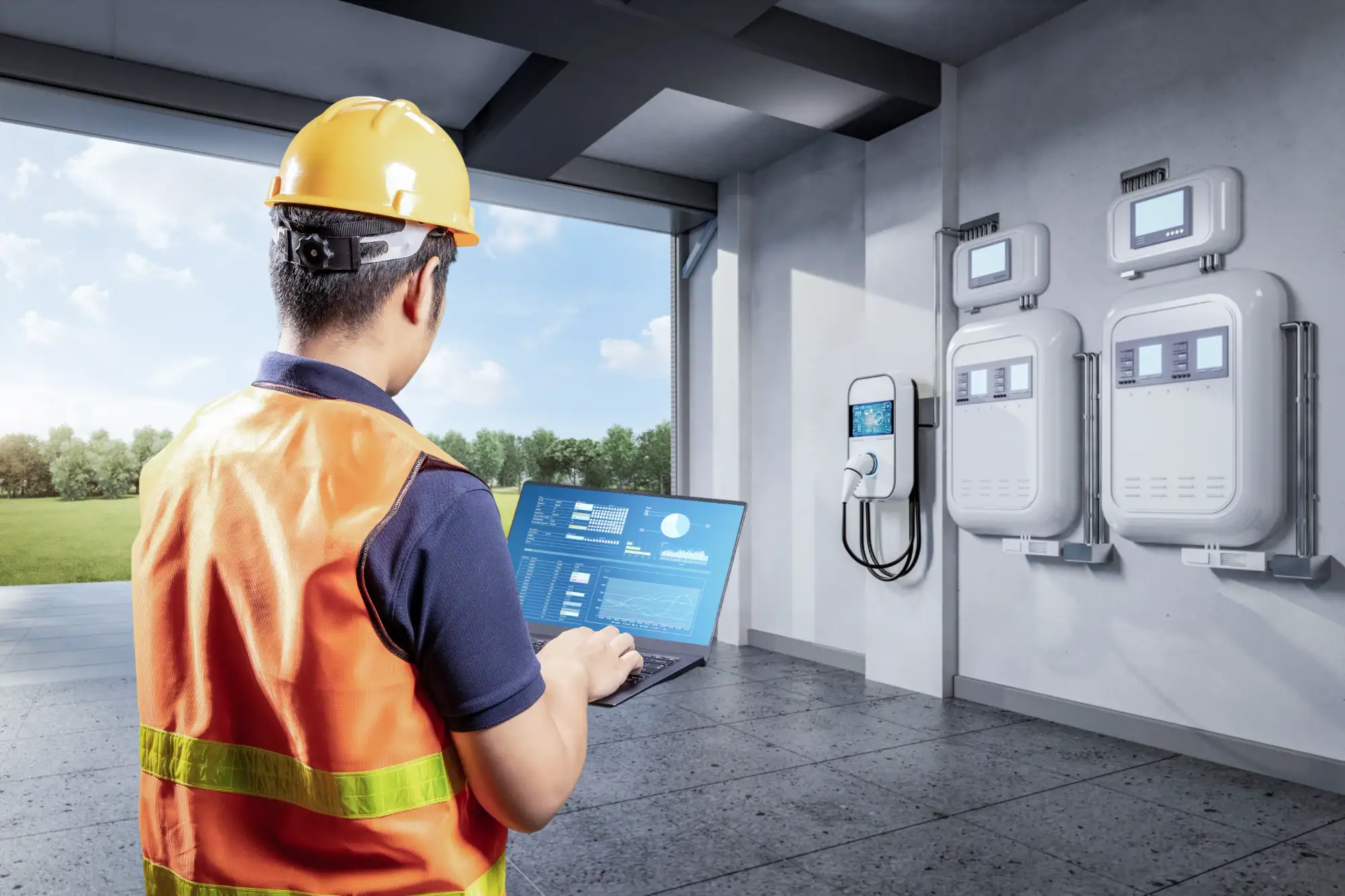
If you’ve recently bought an electric vehicle — or you’re planning to — you’ve probably already discovered that a standard 120-volt outlet charges most EVs at roughly three to five miles of range per hour. That’s not practical for daily use. A Level 2 charger running on a dedicated 240-volt circuit gets you closer to 25 miles per hour of charging, which is what most people actually need.
The catch is that installing a Level 2 charger isn’t just about running a new circuit. It starts with your panel. Many homes in Cook County — particularly those built in the 1970s and 1980s — have 100-amp service panels. That was adequate for the time, but when you add EV charging on top of an HVAC system, electric appliances, and modern lighting loads, you can run out of capacity fast. We evaluate your panel before recommending a charger installation, not after.
This is where the work gets more involved than people anticipate. A panel upgrade to 200-amp service, combined with a new dedicated circuit for your charger, is a full electrical installation project — not a weekend task. It requires permits, inspections, and a contractor who’s properly registered to pull those permits in your specific municipality. Cook County has over 130 municipalities, and each one can have its own permitting requirements. An electrician licensed in DuPage County isn’t automatically cleared to pull permits in Schaumburg or Naperville.
We’ve spent 25 years navigating exactly this landscape. The permit process in one Cook County suburb is not the same as the next town over, and we know the difference. When we install an EV charger circuit or upgrade a panel, the work is permitted, inspected, and done to current code — the first time.
There’s no shortage of YouTube tutorials on electrical work, and some of it is genuinely useful for understanding how things work. But there’s a meaningful gap between understanding a concept and executing it safely inside a live electrical system — especially in an older Cook County home where the wiring may not behave the way a tutorial assumes.
The most immediate risk is safety. Faulty wiring causes roughly half of all electrical fires in the U.S. Overloaded circuits account for another significant portion of those fires. These aren’t abstract statistics — they’re the outcomes we get called to address after someone tried to add a circuit without fully understanding the load calculations involved, or spliced wiring in a way that looked fine but wasn’t.
Beyond the physical risk, there’s a legal and financial one. Unpermitted electrical work in Cook County can void your homeowner’s insurance coverage for any claim related to that work. It also surfaces during home sales — a buyer’s inspection will flag unpermitted work, and you’ll either need to remediate it before closing or negotiate a price reduction. Neither outcome is cheaper than doing it right the first time.
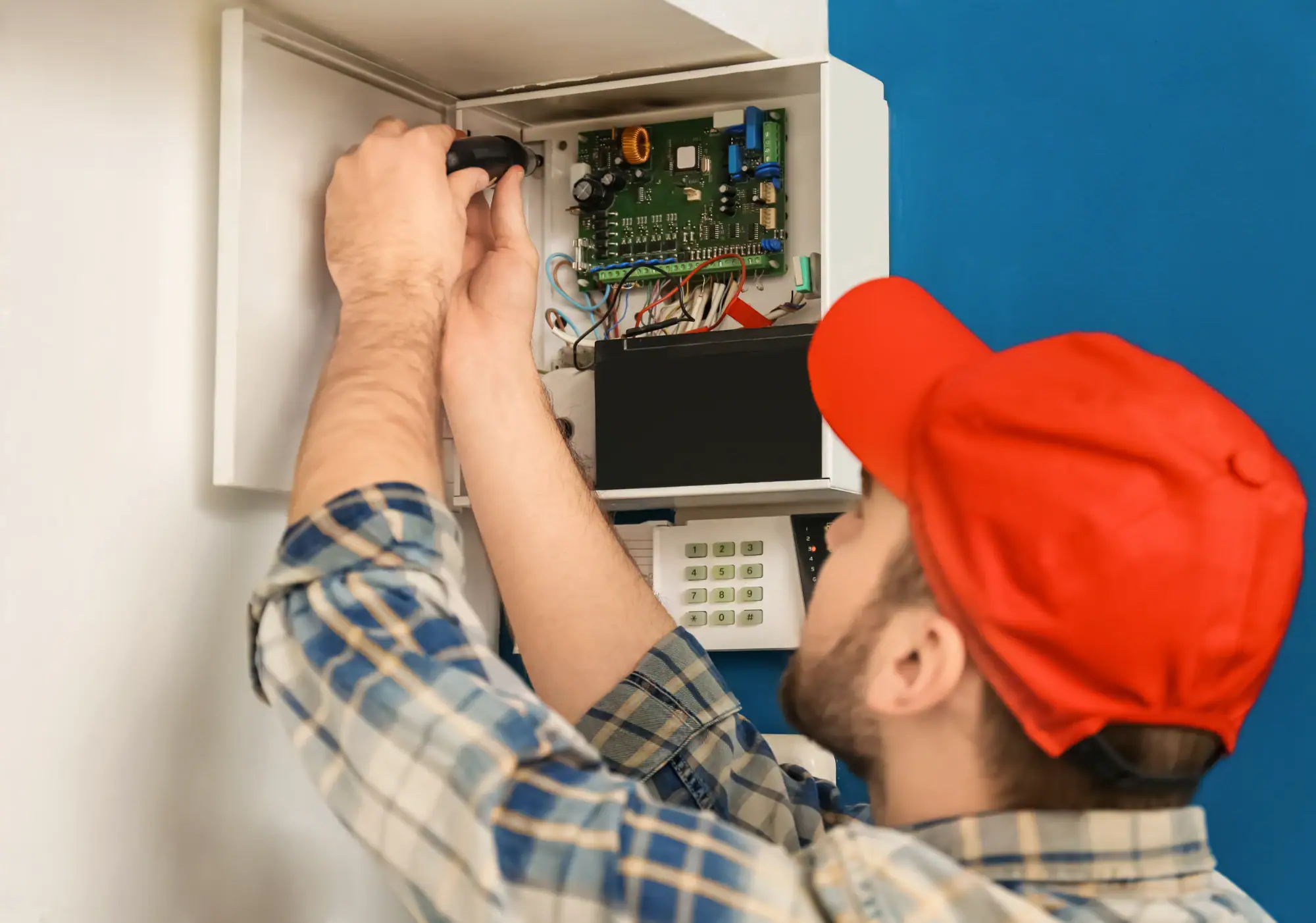
Panel work deserves special mention here. Upgrading a breaker panel involves working at the service entrance — the point where utility power enters your home. That portion of the system stays live even when your main breaker is off. It cannot be de-energized by the homeowner. This is not a job where “careful” is a sufficient safety measure. It’s one of the few tasks in residential electrical work where the risk is genuinely severe, and where a licensed professional isn’t just the better option — it’s the only reasonable one.
Want live answers?
Connect with a Jimco Electric expert for fast, friendly support.
Illinois doesn’t issue a statewide electrician’s license. Unlike many states, licensing here happens at the city and county level — which means the credentials that qualify someone to work in one part of the Chicago metro don’t automatically transfer to the next municipality over.
Cook County has its own electrical contractor registration requirements, separate from the City of Chicago’s licensing process. A contractor who’s properly registered in Cook County has met those specific local requirements and is authorized to pull permits and pass inspections in unincorporated county areas and participating municipalities. That distinction matters when you’re hiring someone to do work that will eventually be inspected.

The simplest starting point is to ask directly: Are you licensed, bonded, and insured? And are you registered to pull permits in my municipality? A legitimate contractor will answer both questions without hesitation and be able to provide documentation. If you get vague answers or a pivot to “we handle all that,” that’s worth paying attention to.
Licensed means the contractor has met the training and examination requirements to perform electrical work legally. In Illinois, that typically involves four years of apprenticeship — roughly 8,000 hours of hands-on work — plus several hundred hours of classroom instruction. It’s not a weekend certification.
Bonded means there’s a financial guarantee in place if the contractor fails to complete the work or meet the terms of the agreement. Insured means the contractor carries liability coverage and workers’ compensation — so if something goes wrong on your property, you’re not the one absorbing the cost.
All three matter. A contractor who’s licensed but not insured leaves you exposed if a technician is injured on your property. A contractor who’s insured but not properly registered in Cook County may not be able to pull the permits your project requires — which means you could end up with completed work that has no inspection record and no legal standing.
We’re licensed, bonded, and insured, and we carry the Cook County registration required to permit and inspect work throughout the communities we serve — including Naperville, Schaumburg, Aurora, and Chicago neighborhoods from Lakeview to Bronzeville. When we say the work will pass inspection, we mean it literally: every installation we complete meets current electrical codes, and we don’t leave a job until it does.
**Do I need a permit for electrical installation in Cook County?** For most electrical work beyond simple fixture replacements, yes. Adding circuits, upgrading panels, installing EV chargers, and rewiring all require permits in Cook County and its municipalities. The permit process exists to ensure the work is inspected by a qualified official — which protects you, your insurance coverage, and the next buyer if you ever sell. We handle the permit process as part of every installation job, so you don’t have to navigate it yourself. In Cook County specifically, the permitting timeline varies by municipality, but we know those timelines and build them into our project schedules.
**What happens if electrical work doesn’t pass inspection?** Failed inspections mean rework. The contractor has to correct whatever didn’t meet code, reschedule the inspection, and — depending on what was wrong — potentially open walls or ceilings that have already been closed. This is more common than most homeowners realize, particularly when work is done by contractors who aren’t familiar with the specific code requirements in a given Cook County municipality. Our installations are designed to pass the first time, which means no delays, no rework fees, and no extended timelines.
**How much does electrical installation cost in Cook County?** It depends on the scope of the work, the age and condition of your existing system, and what permits are required. What we can tell you is that you’ll know the full cost before we start. We don’t give you a number to get in the door and adjust it after the fact. If we find something unexpected during the job, we talk to you before we proceed — not after. That’s not a policy we advertise as a selling point; it’s just how we think a job should be run.
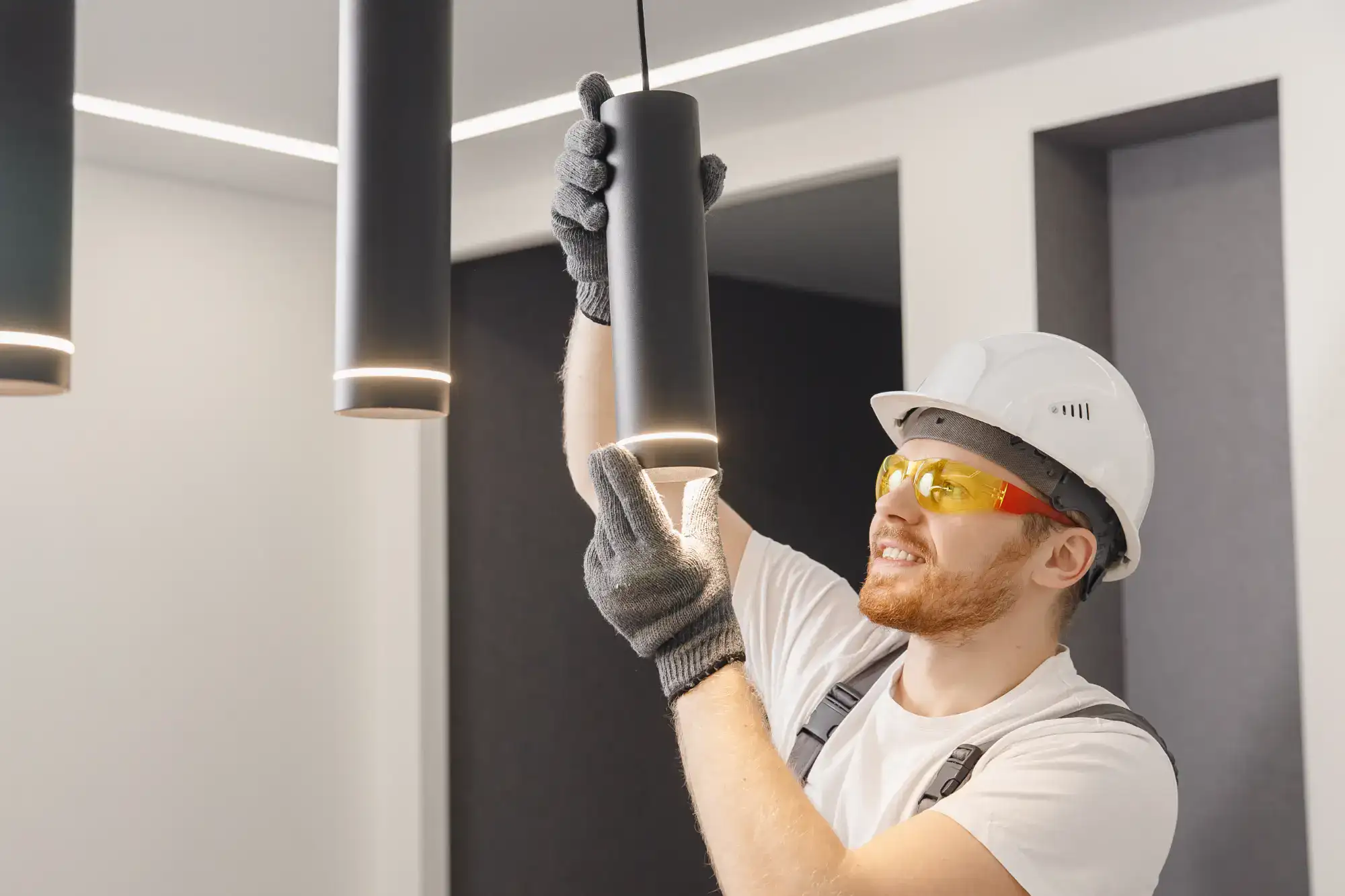
**Can I get same-day service for electrical installation work in Cook County?** For emergency-adjacent situations — a panel that’s failing, a circuit that’s unsafe, wiring that’s creating an immediate hazard — yes, same-day service is available. For planned installations like EV charger circuits or lighting upgrades, we’ll work with your schedule and give you a realistic timeline upfront. We’ve been doing this in Cook County for 25 years, and we know that people’s time matters.
The short version of everything above: electrical installation in Cook County is not a one-size-fits-all situation. The age of your home, the capacity of your panel, the municipality you’re in, and the credentials of the contractor you hire all affect whether the job gets done safely, legally, and in a way that holds up over time.
What you’re looking for is someone who knows this market, carries the right credentials for it, and will tell you the truth about what your project actually involves — before the work starts, not after.
If you’re dealing with an electrical issue that needs attention, or you’re planning an installation and want to understand what it actually entails, reach out to us. We’ll give you a straight answer.
Article details:
Share:
Continue learning: